

The Basics of Sports Data and How it Changes Games

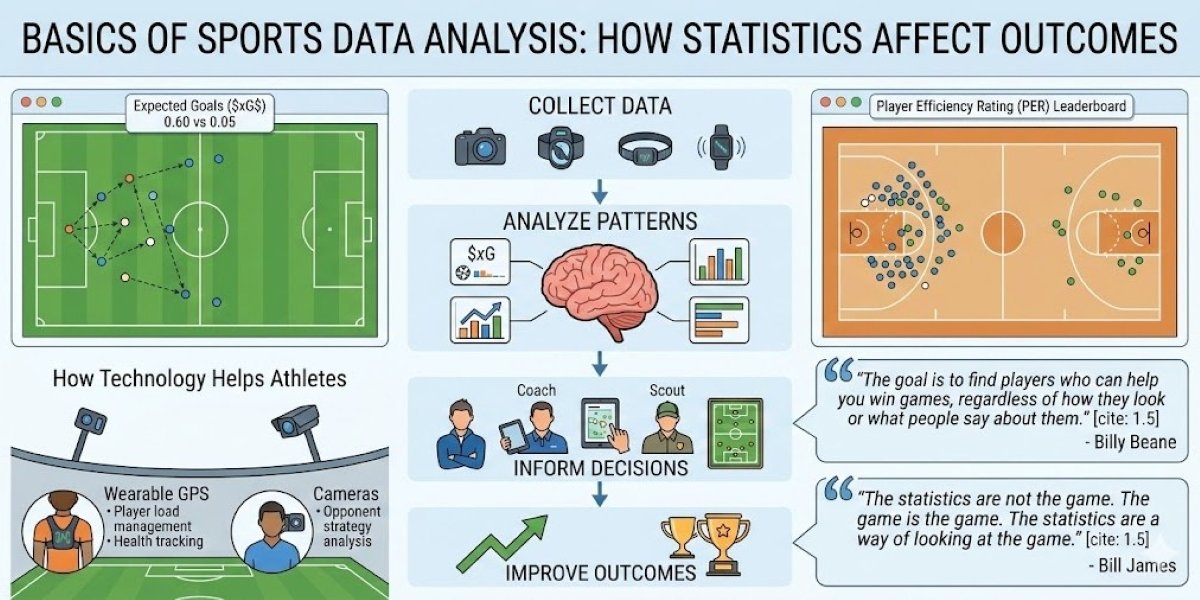
Fans love sports for the action—the goals, the home runs, the buzzer-beaters. But behind the scenes, another player has transformed the game: data. Sports data analysis is the process of collecting information from matches and turning it into numbers. These numbers help teams understand past performance and predict future outcomes.
The Beginning of the Data Era
One of the most famous stories about data in sports comes from baseball’s Oakland Athletics. In the early 2000s, the team had limited resources and couldn’t afford star players. Manager Billy Beane turned to statistics, identifying undervalued athletes with overlooked skills—like drawing walks to first base. By building a roster based on numbers rather than reputation, the A’s competed successfully against wealthier teams. This approach, later popularized in Moneyball, changed sports forever.
“The goal is to find players who can help you win games, regardless of how they look or what people say about them,” said Billy Beane.
Today, every major professional team uses data analysis. It’s no longer a secret weapon—it’s essential for staying competitive.
How Data Changes the Way Games Are Played
Statistics don’t just record history; they shape strategy. In the past, coaches relied on instinct. Now, they rely on real-time data.
In basketball, analytics revealed that three-point shots are more efficient than long two-pointers. As a result, players now attempt far more threes, changing the pace and spacing of the game.
In soccer, teams use “Expected Goals” (xG) to measure the quality of scoring chances. A long-range shot might have an xG of 0.05 (5% chance of scoring), while a close-range shot could be 0.60. Coaches use this data to encourage smarter shot selection and better positioning.
The Technology Behind the Numbers
Data comes from advanced technology. Stadiums are equipped with cameras that track every movement, while athletes wear sensors that monitor performance and health.
| Type of Tech | What It Tracks | Why It Matters |
| GPS Trackers | Distance and speed | Helps prevent fatigue and overtraining |
| Optical Cameras | Ball and player movement | Improves tactical decisions and team strategy |
| Heart Monitors | Stress and fatigue levels | Guides rest and recovery to avoid injury |
If data shows a player slowing down or experiencing high stress, coaches can rest them to prevent injury and ensure peak performance during critical games.
Key Statistics to Know
Different sports rely on different metrics. Here are a few widely used examples:
- Wins Above Replacement (WAR): Baseball stat showing how many wins a player adds compared to an average replacement.
- Player Efficiency Rating (PER): Basketball metric combining positive contributions (points, rebounds) and subtracting negatives.
- Completion Percentage Over Expected (CPOE): Football stat measuring whether a quarterback completes difficult passes beyond the expected rate.
“The statistics are not the game. The game is the game. The statistics are a way of looking at the game,” said Bill James, a pioneer of sports analytics.
Why Fans Care About Data
Data isn’t just for coaches—it’s for fans too. Fantasy sports rely on real-life statistics, allowing fans to build “dream teams” and compete based on player performance. Betting platforms also use historical data to estimate outcomes, turning games into puzzles that fans can analyze and debate.
The Limits of Statistics
Numbers are powerful, but they aren’t perfect. Sports are played by humans, not machines. A player might underperform due to personal issues, or a team might win thanks to luck. Data can predict likelihoods, but it can’t guarantee results.
The best teams balance analytics with human judgment, combining insights from scouts, coaches, and veteran players with statistical models.
Looking to the Future
As technology advances, sports analytics will become even more sophisticated. Artificial intelligence may soon predict injuries before they happen or suggest optimal plays in real time. For now, understanding the basics of sports data helps fans and professionals alike see the game more clearly. Winning is not just about strength—it’s about being smart with information.