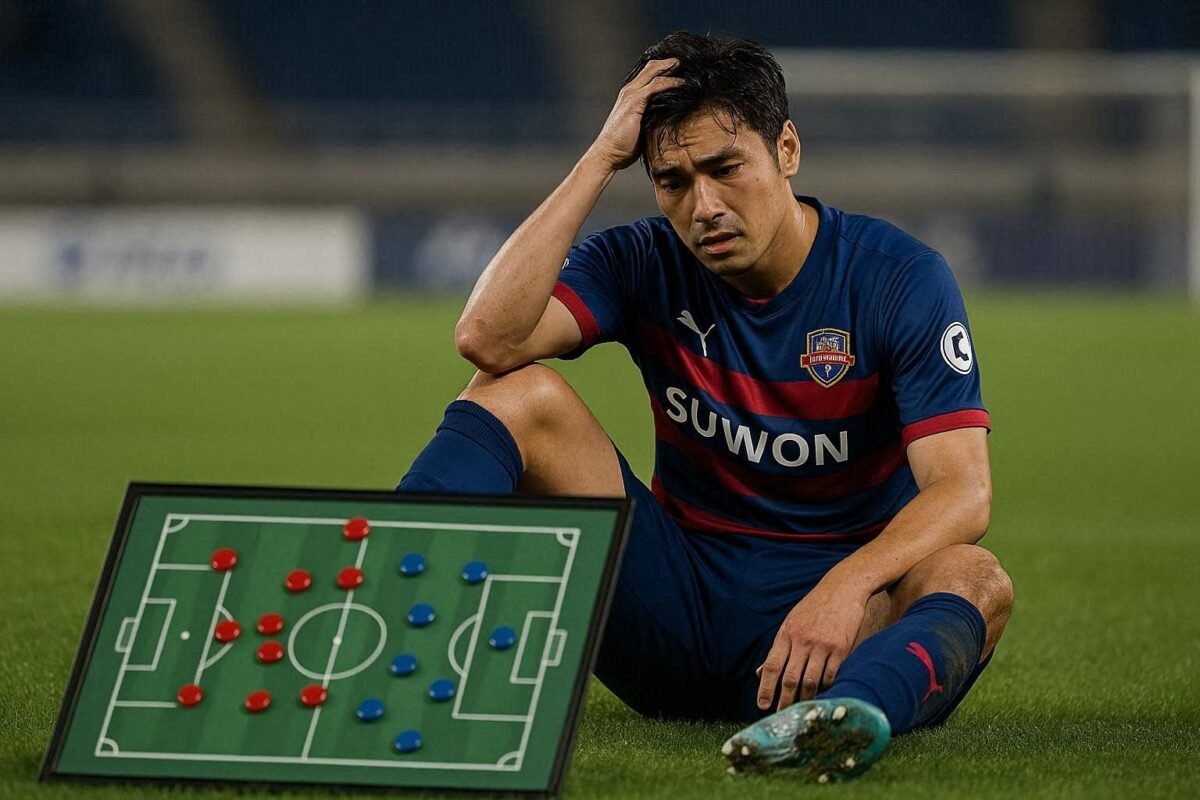

Suwon FC’s Tactical Struggles in K League 2: Why Their 4‑2‑3‑1 Is Breaking Down

Introduction: Recent Match Context

On April 18, Suwon FC drew 2–2 with Daegu FC before collapsing 3–0 against Seoul E‑Land. These back‑to‑back fixtures didn’t just highlight inconsistency in results; they exposed deeper tactical flaws. Suwon’s preferred 4‑2‑3‑1 system is leaving dangerous gaps between midfield and defense, and opponents who press high or counter quickly are exploiting those spaces with ruthless efficiency. For a detailed breakdown of the Daegu match itself, see Suwon FC vs. Daegu FC Tactical Breakdown in K League 2.

1. The 4‑2‑3‑1 Blueprint and Suwon’s Application

The 4‑2‑3‑1 is one of modern football’s most common formations. Two holding midfielders shield the back line, three attacking midfielders provide creativity and width, and a lone striker leads the line. In theory, it balances defense and attack.

Suwon FC, however, use the system to emphasize possession. They build patiently from the back, circulate the ball through midfield, and rely on their attacking trio to create chances. The problem is structural: when both holding midfielders push forward or when fullbacks overlap aggressively, the defensive shield collapses. The space in front of the center‑backs becomes a free zone for opponents to exploit. For background on how the 4‑2‑3‑1 has evolved globally, see UEFA’s tactical analysis resources.

2. Data Exposes the Weakness

Numbers tell the story. Across their last five matches, Suwon have conceded an average of 1.8 goals per game. More telling is how those goals arrive. When pressed high, Suwon’s pass completion drops below 70%, leading to turnovers in dangerous zones.

Against Seoul E‑Land, Suwon enjoyed 55% possession in the opening half hour but repeatedly lost the ball under pressure. E‑Land’s expected goals (xG) surged to 2.1 by halftime, reflecting the quality of chances created from those turnovers. The eventual 3–0 scoreline was not a surprise; it was the logical outcome of structural fragility. For readers new to advanced metrics, Opta’s guide to expected goals explains how xG is calculated and why it matters.

3. Defensive Transition: The Core Problem

The most glaring issue is Suwon’s defensive transition. When possession is lost, the midfield and back line often stretch 20 meters apart. That gap is a gift to opponents.

In the Daegu match, the attacking midfielder repeatedly found space between Suwon’s lines, launching two decisive shots that led to goals. The draw was salvaged only by Suwon’s attacking talent, not by tactical resilience. The pattern is clear: Suwon’s system collapses when the double pivot fails to hold position. For comparison, see how K League official reports highlight transition play as a decisive factor in recent fixtures.

4. Tactical Recalibration: What Needs to Change

To stabilize, Suwon must recalibrate their 4‑2‑3‑1. Three adjustments stand out:

  • Redefine the double pivot. One midfielder must remain anchored in front of the defense at all times. Without a designated “screen,” the center‑backs are exposed.
  • Control fullback advances. Overlapping runs should be staggered. If one fullback pushes forward, the other must stay deeper to maintain balance.
  • Develop a Plan B under pressure. When opponents press high, Suwon cannot insist on short passes. They need rehearsed alternatives: longer diagonals, quicker vertical balls, or even direct play to bypass the press.

For coaching insights on adapting formations, the Asian Football Confederation’s technical reports provide case studies from across the region.

5. Educational Lens: xG and Defensive Efficiency

For fans, understanding Suwon’s struggles requires grasping two key concepts: expected goals (xG) and defensive efficiency.

  • xG quantifies the likelihood of a shot becoming a goal. High xG chances usually come from close range or clear one‑on‑one situations.
  • Defensive efficiency measures how well a team limits both the quantity and quality of shots conceded.

Suwon’s issue is not possession or shot creation; it’s that their opponents are generating high‑quality chances. Allowing an average opponent xG of 1.9 per match means Suwon’s defense is consistently giving up opportunities that should result in goals. Fans who look only at possession stats miss the bigger picture: control of the ball is meaningless if it leads to defensive exposure. For a broader educational primer, see FIFA’s technical study group reports.

6. Tactical Identity vs. League Reality

Suwon FC’s identity has long been tied to attacking football. Fans appreciate the ambition, but K League 2 is unforgiving. Promotion battles reward consistency and defensive solidity. Teams like Seoul E‑Land have learned to exploit Suwon’s adventurous style by pressing aggressively and countering into open spaces.

If Suwon cling to possession without addressing defensive gaps, they risk falling behind in the promotion race. Tactical identity must evolve to meet competitive reality. For context on promotion battles, K League 2 standings and statistics provide the competitive picture.

7. Fan Culture and Tactical Literacy

Interestingly, fan communities are increasingly discussing these tactical nuances. Online forums dissect xG charts, midfield spacing, and pressing triggers. This reflects a broader shift in Korean football culture: supporters are not just cheering; they’re analyzing.

Suwon’s struggles, then, become a case study for fans learning how formations and transitions shape outcomes. Understanding why a 4‑2‑3‑1 can fail under pressure deepens appreciation of the sport and elevates fan discourse beyond surface‑level commentary. For a cultural perspective, the Ministry of Culture, Sports and Tourism offers resources on how sports analysis is shaping fan engagement in Korea.

8. Lessons for Players and Coaches

For Suwon’s coaching staff, the lesson is clear: tactical rigidity is dangerous. The 4‑2‑3‑1 must be adapted to the squad’s strengths and the league’s demands. Training sessions should emphasize:

  • Compactness in transition. Midfielders must collapse quickly to close gaps.
  • Press resistance. Players need rehearsed passing patterns to escape high pressure.
  • Situational awareness. Fullbacks and pivots must read the game and adjust positioning dynamically.

For players, the challenge is mental as much as physical. Recognizing when to hold shape versus when to attack is the difference between conceding and controlling.

9. Broader Implications for K League 2

Suwon’s case illustrates a broader truth about K League 2: tactical sophistication is rising. Teams are no longer content to sit deep; they press, counter, and exploit structural weaknesses. Possession football, once a hallmark of superiority, is now a risk if not paired with defensive discipline.

This evolution makes the league more competitive and educational for fans. Watching Suwon struggle is frustrating for supporters, but it also highlights how tactical details decide matches.

Conclusion: The Road Ahead

Suwon FC’s recent results are more than blips; they are warnings. The 4‑2‑3‑1 system, applied without balance, is exposing the team to repeated punishment. Unless recalibrated, Suwon will continue to concede heavily against pressing and counterattacking opponents.

For fans, the takeaway is equally important: football is not just about possession or star players. It is about structure, transitions, and efficiency. Suwon’s tactical struggles are a reminder that formations are frameworks, not guarantees. Success depends on how those frameworks are executed under pressure.

As the season unfolds, the question is whether Suwon can adapt. Their promotion hopes hinge not on scoring more goals, but on conceding fewer — and that requires tactical discipline as much as attacking flair.

The Illusion of Rigged Systems at the Start

First Contact Feels Hostile, Not Neutral

Early experiences inside any complex system tend to feel hostile. Not neutral. Not merely difficult. Hostile in a way that feels personal, intentional, and unfair. Beginners often describe the same emotional pattern regardless of the domain. The rules seem opaque, outcomes feel lopsided, and losses arrive with a speed that suggests the system is designed to extract value from newcomers. This perception is so common that many people mistake it for evidence. If it feels rigged, it must be rigged.

That conclusion is understandable. It is also usually wrong.

What beginners are encountering is not deception, but exposure. Systems reveal their structure asymmetrically. They punish before they explain. They deliver consequences long before they deliver context. And because humans are wired to infer intent from pain, early losses are interpreted as proof of bias rather than signals of complexity. This friction often stems from how a well-functioning market can still feel inherently unfair to those who have not yet decoded its underlying mechanics.

The feeling of being rigged is not a property of the system. It is a property of first contact.

The Three Things Beginners Always Lack

When someone enters a system for the first time, they lack three things simultaneously. They lack historical reference, they lack distributional understanding, and they lack emotional calibration. Any one of these would be manageable on its own. Together, they create a perfect storm where normal outcomes feel abnormal and neutral processes feel adversarial.

The absence of historical reference is the most important piece. Beginners experience outcomes as isolated events rather than as points on a long curve. Without memory of past variance, every result feels definitive. A loss is not one loss among many. It is the loss. When outcomes are interpreted individually instead of statistically, randomness feels targeted. The mind looks for a reason, and intent is the easiest explanation to grab.

Distributional understanding is the second missing layer. Most systems operate on uneven distributions. Losses cluster. Wins thin out. Streaks are normal. Plateaus are expected. Early participation exposes people to the widest swings because they are unfiltered by experience. Veterans expect volatility because they have seen it before. Beginners experience the same volatility as betrayal. The system did not warn them, so it must be hiding something. This misreading of variance is closely related to how people mistake short-term patterns for meaning, a dynamic explored in variance and volatility across probabilistic systems.

Emotional calibration is the third factor. New participants have not yet adjusted their expectations to the system’s feedback speed or intensity. Early feedback arrives too fast and too blunt. Losses feel louder than they statistically are because there is no internal volume control yet. Over time, experienced participants learn how much weight to give each outcome. Beginners treat every signal as urgent, every result as diagnostic, every setback as meaningful.

Why Neutral Outcomes Feel Like Targeted Punishment

This is where the idea of rigging takes root. The system feels stacked because it is revealing information before the user has the tools to interpret it. The pain comes first. The explanation comes later, if at all.

Another reason systems feel rigged early on is because beginners confuse symmetry with fairness. Many people enter systems expecting balanced outcomes over short periods. If effort is applied, reward should follow. If rules are followed, results should even out quickly. When that does not happen, the assumption shifts from misunderstanding to accusation.

But fairness in complex systems is not about immediate balance. It is about long-term consistency. Systems are fair over distributions, not over moments. They do not compensate in real time. They do not smooth early losses. They do not care when you entered. From the system’s perspective, there is no beginner phase. There is only participation. This disconnect is closely related to outcome bias—the tendency to judge decisions by their results rather than by the process that produced them.

This mismatch between human expectation and system behavior creates a psychological gap that feels like manipulation. The system keeps taking without explaining. It does not adjust for inexperience. It does not slow down to teach. It simply continues operating as designed.

When Early Wins Make Things Worse

Early success can actually intensify the feeling of rigging later. When a beginner experiences a brief win streak, it sets an internal baseline that the system never promised. The mind anchors to that early outcome and treats it as representative. This is why early outcomes are often mistaken for confirmation rather than recognized as variance.

When randomness inevitably swings the other way, the system feels like it changed the rules.

This is why people often say the system was fair at first and then became rigged. What they are describing is not a shift in mechanics, but a delayed encounter with variance. Early randomness feels like skill. Later randomness feels like sabotage.

The Illusion of Control Collapsing

There is also a control illusion at play. Beginners overestimate how much influence they have over outcomes because they have not yet experienced enough feedback to see where control actually ends. When results diverge from intention, the loss of perceived control feels external rather than structural. It is easier to believe the system is stacked than to accept that control was always limited.

Over time, as participants accumulate experience, the feeling of rigging fades not because the system becomes kinder, but because interpretation improves. Outcomes are no longer read as messages. Losses stop feeling personal. Variance becomes expected instead of suspicious. The system did not change. The lens did.

Why Experience Changes the Narrative

This is why experienced participants rarely describe systems as rigged, even when they acknowledge that outcomes are harsh and uneven. They understand where the edges are. They know which outcomes are noise and which are signal. They have learned to separate emotional discomfort from structural reality.

The early phase feels rigged because it is the phase where misunderstanding is punished most efficiently. Systems do not ease people in. They expose them. The discomfort is not a trap. It is a filter. Those who mistake it for malice leave early. Those who stay long enough to understand it stop calling it unfair.

In that sense, the feeling of rigging is not a warning sign about the system. It is a diagnostic signal about the user’s current level of understanding.

Suwon Samsung Bluewings vs. Gimpo FC: Structural Lessons in Squad Rotation

Introduction

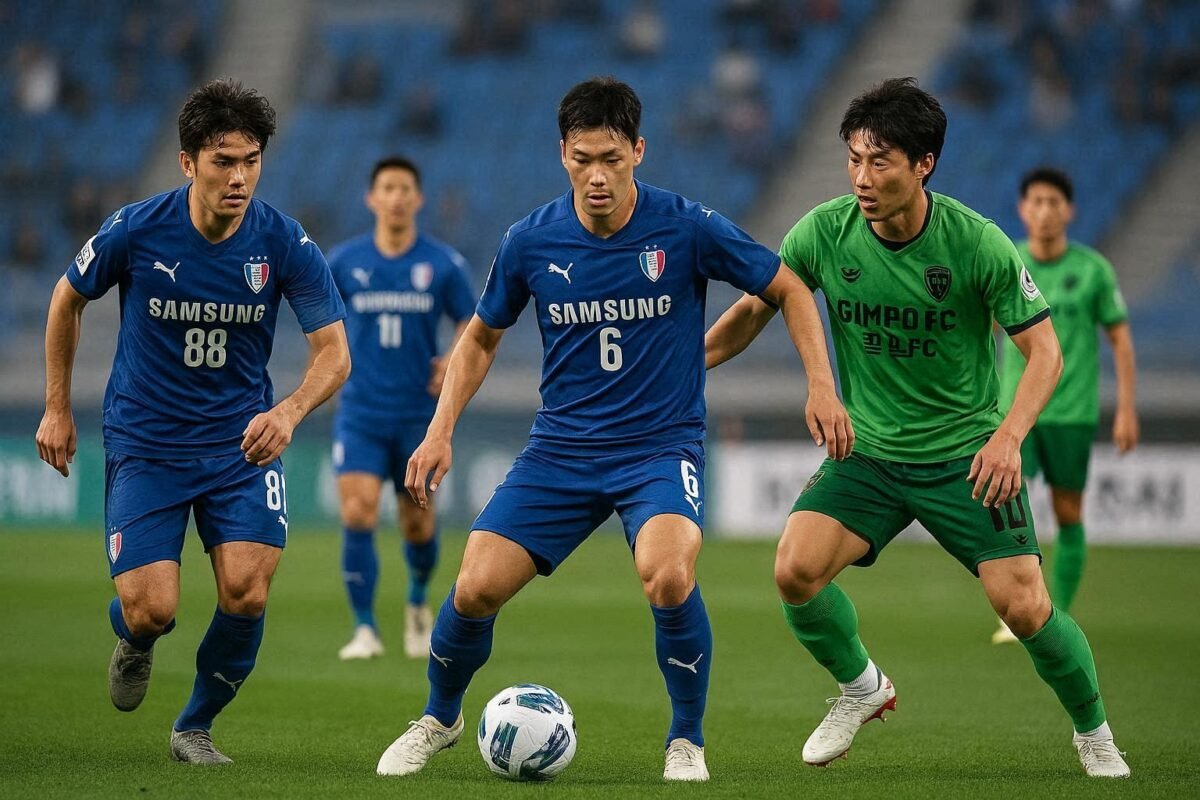
On April 12, 2026, Suwon Samsung Bluewings faced Gimpo FC in another K League 2 fixture.
While the scoreline captured immediate attention, the deeper narrative of the match revolved around squad rotation,
player development, and the broader structural lessons that clubs in Korea’s second division are learning.
For readers of SuwonInsider, this game serves as a case study in how clubs manage depth and rotation within the
constraints of a demanding league calendar.

Squad Rotation and Youth Integration

The Bluewings made a deliberate choice to rotate younger players into the lineup.
This decision reflects a league-wide emphasis on balancing immediate results with long-term talent pipelines.
By giving academy graduates and fringe players meaningful minutes, Suwon is not only preparing for the rigors of the season
but also investing in the future of the club.

Such rotation strategies are not unique to Suwon. Across K League 2, clubs are increasingly aware that
sustainable success requires nurturing young talent while maintaining competitiveness.
The balance is delicate: too much rotation risks short-term results, while too little rotation can stunt player development.

For a tactical comparison, readers can explore
Suwon FC vs. Daegu FC tactical breakdown,
which highlights similar themes of squad depth and rotation in K League 2.

Possession vs. Conversion Efficiency

Match data revealed that Suwon Samsung Bluewings dominated possession against Gimpo FC.
However, possession dominance did not translate into goals.
The team struggled with conversion efficiency, underscoring the importance of finishing metrics in evaluating performance.
This disconnect between control and execution is a recurring theme in modern football analytics.

Clubs worldwide face similar challenges. For instance,
UEFA’s official site often publishes match reports that highlight possession statistics
alongside expected goals (xG) metrics, reminding fans and analysts alike that control of the ball is only one part of the equation.

Structural Lessons for K League 2

The Bluewings vs. Gimpo FC fixture illustrates broader structural lessons for K League 2 clubs.
First, squad rotation is not merely a tactical choice but a structural necessity in a league with congested schedules.
Second, player development must be integrated into competitive fixtures rather than relegated to training sessions.
Finally, performance evaluation must go beyond possession metrics to include finishing efficiency, defensive resilience,
and adaptability.

These lessons resonate with global football trends.
FIFA’s development programs emphasize the importance of youth integration and
holistic performance analysis, aligning with the strategies seen in Korea’s domestic leagues.

Fan Engagement and Community Insight

For fans, the Bluewings’ rotation strategy sparked lively debate across online communities.
Supporters praised the opportunity given to younger players, while others worried about the immediate impact on results.
This tension reflects the dual identity of football clubs: institutions tasked with winning games today while
building sustainable futures for tomorrow.

Platforms like K League official site and independent fan forums
provide spaces where these debates unfold, highlighting the role of digital communities in shaping narratives around squad rotation.

Comparative Case Studies

Looking beyond Korea, similar squad rotation strategies can be observed in European leagues.
Clubs in the English Championship, for example, face grueling schedules that demand careful management of player workloads.
Rotating younger players into competitive fixtures is often seen as a way to balance immediate competitiveness with
long-term sustainability.

Analysts at The Guardian Football have frequently discussed
how rotation policies impact both team performance and player development, offering comparative insights that
resonate with the Bluewings’ approach.

Conclusion

The Suwon Samsung Bluewings vs. Gimpo FC match on April 12, 2026, was more than a fixture in K League 2.
It was a microcosm of the challenges and opportunities facing clubs in Korea’s second division.
Squad rotation, youth integration, possession dominance, and conversion efficiency all converged to create
a case study in structural lessons for modern football.

For SuwonInsider readers, the game underscores the importance of analyzing football beyond the scoreline.
It invites fans, analysts, and club officials to consider how rotation strategies, player development,
and performance metrics intersect to shape the future of Korean football.
As K League 2 continues to evolve, these lessons will remain central to the narrative of the league and its clubs.

Final Thought: Football is not only about winning matches but also about building structures
that sustain success. The Bluewings’ approach to squad rotation against Gimpo FC offers a blueprint for how
clubs can balance immediate results with long-term growth, ensuring that the future of Korean football remains bright.

Suwon FC vs. Daegu FC: Tactical Breakdown in K League 2

Introduction

On April 11, 2026, Suwon FC hosted Daegu FC at Suwon Civil Stadium in a K League 2 clash that ended in a tense draw. While the scoreboard reflected parity, the deeper narrative of the match lies in Suwon’s tactical structure and defensive resilience. This article provides a detailed breakdown of Suwon’s setup, their transitional play, and the broader implications for tactical diversity in Korea’s second tier.

Suwon’s Defensive Shape

Suwon deployed a back four anchored by veteran goalkeeper Yang Han-been. Seo Jaemin and Lee Siyoung were tasked with balancing width and central coverage, ensuring that Daegu’s wide attacks were contained while maintaining compactness in the middle. The defensive line operated with discipline, often retreating quickly to absorb pressure rather than stepping high into midfield.

This conservative approach limited Daegu’s penetration but also highlighted Suwon’s reliance on reactive defending. Their shape was effective in preventing clear-cut chances, yet it exposed vulnerabilities when Daegu overloaded the flanks.

Midfield Transitions

Suwon’s midfield trio emphasized transitional play, attempting to break quickly after regaining possession. However, possession data revealed that Suwon struggled to sustain sequences beyond three passes under pressure. This inability to build longer phases of play forced them into a counter-attacking identity, relying on rapid vertical movements rather than patient buildup.

For a deeper look at Suwon’s attacking efficiency in transition, see
Suwon FC Attacking Efficiency in Transition Play.

Daegu’s Tactical Response

Daegu FC approached the match with a more possession-oriented style, attempting to stretch Suwon’s defensive block. Their midfielders rotated frequently to create passing lanes, and their fullbacks pushed high to provide width. While this strategy generated territorial dominance, Suwon’s compact defensive line forced Daegu into speculative shots rather than clear scoring opportunities.

The tactical contrast between Suwon’s reactive defending and Daegu’s proactive possession highlighted the diversity of approaches in K League 2.

Statistical Insights

  • Possession: Daegu held 58% of the ball compared to Suwon’s 42%.
  • Pass Sequences: Suwon averaged 2.8 passes per possession, while Daegu averaged 5.6.
  • Shots: Daegu registered 14 attempts, but only 4 were on target. Suwon managed 9 attempts, with 3 on target.
  • Defensive Actions: Suwon recorded 21 clearances and 15 interceptions, underscoring their defensive workload.

Fan Engagement and Atmosphere

The match drew significant attention both in the stadium and online. Fans debated Suwon’s reliance on counter-attacks and Daegu’s inability to convert possession into goals. Chants echoed through Suwon Civil Stadium, while online forums buzzed with tactical discussions. This dual engagement—stadium energy and digital debate—illustrates the evolving culture of Korean football fandom.

Broader Tactical Trends in K League 2

K League 2 has become a laboratory for tactical experimentation. Teams vary between possession-heavy approaches and counter-attacking strategies, forcing opponents to adapt quickly. Suwon’s reliance on counter-attacks reflects a broader trend where teams prioritize efficiency over control, leveraging transitional moments to create scoring chances.

This diversity enriches the league, making it unpredictable and tactically engaging for fans and analysts alike.

Comparisons with Global Football

Suwon’s style mirrors global trends where underdog teams often rely on compact defending and quick transitions. Similar strategies are seen in European leagues, where mid-table clubs frustrate possession-heavy giants by absorbing pressure and striking on the break. The K League 2 context adds a unique flavor, as teams balance local player development with tactical pragmatism.

External references:

Educational Insight

This match serves as a case study in tactical adaptation. Coaches and analysts can use Suwon’s performance to illustrate the importance of defensive structure, transitional play, and the limitations of possession under pressure. For fans, it highlights how tactical diversity enriches the viewing experience, making every match a unique puzzle.

Challenges Ahead for Suwon

Suwon’s reliance on counter-attacks raises questions about sustainability. Against teams that defend deep, their transitional approach may struggle to generate chances. Improving possession sequences and integrating more creative midfield play will be crucial for long-term success. Balancing defensive solidity with offensive variety remains their biggest challenge.

Conclusion

The April 11 draw between Suwon FC and Daegu FC was more than a balanced scoreboard—it was a tactical showcase of contrasting philosophies. Suwon’s defensive discipline and transitional identity clashed with Daegu’s possession-oriented approach, creating a compelling narrative for fans and analysts. As K League 2 continues to evolve, matches like this highlight the league’s tactical richness and the broader trends shaping Korean football.

Ultimately, Suwon’s reliance on counter-attacks underscores both their strengths and limitations. Their ability to adapt will determine their trajectory in K League 2, while fans can look forward to more tactical drama in the weeks ahead.

KT Wiz’s Data-Driven Victory Over Lotte Giants (7–3)

Introduction

On April 7 in Busan, KT Wiz defeated the Lotte Giants 7–3 in a game that highlighted the growing importance of data-driven strategies in the KBO. The victory was anchored by Ko Young-pyo’s steady pitching and Park Yeong-hyun’s composed save. While the Giants collected more hits overall (11 compared to KT’s 9), KT demonstrated how on-base efficiency and situational hitting can outweigh raw hit totals. This contest serves as a practical case study for sabermetrics concepts such as on-base percentage (OBP) and run expectancy.

Pitching Foundation: Ko Young-pyo and Park Yeong-hyun

Ko Young-pyo delivered a performance that exemplified control and efficiency. His ability to limit walks and induce ground balls kept Lotte’s offense from converting their hit advantage into meaningful rallies. Park Yeong-hyun closed the game with a save that reflected composure under pressure, ensuring KT’s tactical execution translated into a secure win.

Pitching stability remains a central theme for KT Wiz. For readers interested in broader rotation concerns, see
KT Wiz Suwon Insider: Early Season Pitching Rotation Under Scrutiny.

Batting Order and On-Base Efficiency

KT Wiz’s batting order demonstrated discipline at the plate. Despite fewer total hits, KT generated walks and extended at-bats, forcing Lotte pitchers into high pitch counts. This approach created scoring opportunities in key innings. Situational hitting—sacrifice flies, timely singles, and aggressive baserunning—converted those opportunities into runs.

Sabermetrics emphasizes that OBP is often a better predictor of run production than batting average alone. KT’s lineup embodied this principle, showing that disciplined plate appearances can yield more runs than raw hit totals.

Sabermetrics in Action: OBP and Run Expectancy

On-base percentage (OBP) measures how frequently a batter reaches base, whether by hit, walk, or hit-by-pitch. KT Wiz’s hitters collectively maintained a strong OBP, ensuring that baserunners were consistently available to be driven in. Run expectancy tables, which estimate the average number of runs scored from given base-out states, explain why KT’s ability to load the bases with walks and singles was more impactful than Lotte’s scattered hits.

For example, KT’s two-out rally in the middle innings demonstrated how multiple baserunners increase run expectancy. Even without extra-base hits, KT converted those scenarios into runs, validating sabermetric insights.

Comparative Analysis: KT vs. Lotte

Lotte Giants collected 11 hits but struggled to cluster them effectively. Many of their hits came with bases empty or in low-leverage situations. KT, by contrast, maximized the value of their nine hits by combining them with walks and situational execution. This contrast illustrates why hit totals alone can be misleading indicators of offensive success.

Fans and analysts often debate whether “clutch hitting” is a repeatable skill. Sabermetrics suggests that while clutch performance may vary, teams that consistently reach base are more likely to generate runs. KT’s victory supports this perspective.

Educational Insight: Data Literacy in Baseball

This game provides a clear educational example for fans learning sabermetrics. Understanding OBP, slugging percentage, and run expectancy helps explain outcomes that traditional statistics cannot. KT Wiz’s win despite being out-hit demonstrates why data literacy is essential for modern baseball analysis.

For SuwonInsider readers, the lesson is straightforward: teams win by converting opportunities, not merely by accumulating hits. Walks, disciplined approaches, and situational hitting are critical components of run production.

Community Engagement and Media Coverage

The game was widely discussed across online communities. Highlight clips trended on YouTube and Naver Sports, reinforcing how digital platforms amplify fan engagement. Stadium rituals, such as thundersticks and coordinated chants, continue to define KBO fandom, blending traditional in-person support with modern second-screen interaction.

External coverage can be found at:

Broader Implications for KT Wiz

KT’s victory over Lotte Giants is more than a single win; it reflects a broader organizational commitment to data-driven decision-making. From lineup construction to bullpen management, KT demonstrates how sabermetrics can inform strategy. Their ability to win games despite statistical disadvantages in traditional categories highlights the evolving nature of baseball analysis in the KBO.

As the season progresses, KT’s reliance on OBP and situational hitting will be tested against stronger pitching staffs. Maintaining discipline at the plate and leveraging run expectancy principles will be crucial for sustained success.

Conclusion

KT Wiz’s 7–3 victory over Lotte Giants on April 7 exemplifies the power of data-driven baseball. Ko Young-pyo’s pitching and Park Yeong-hyun’s save provided the foundation, while the batting order’s on-base efficiency and situational hitting converted opportunities into runs. Despite being out-hit, KT demonstrated that sabermetrics concepts like OBP and run expectancy explain outcomes more effectively than hit totals alone.

For fans and analysts, the lesson is clear: baseball success depends on understanding and applying data literacy. KT Wiz’s victory is not just a win in the standings—it is a case study in how modern analytics shape outcomes in the KBO.


Suwon Samsung Bluewings Extend Unbeaten Run with 0–0 Draw vs. Cheongju

Introduction: A Streak Sustained

On April 5, Suwon Samsung Bluewings walked off the pitch with a 0–0 draw against Cheongju in K League 2. While the scoreline may appear uneventful, the result carried weight: Suwon extended their unbeaten run to five matches and maintained their position atop the table. For a club aiming to return to the top flight, the ability to avoid defeat—even in matches where attacking breakthroughs prove elusive—is a hallmark of promotion campaigns.

This match offers a lens into how defensive solidity, tactical compactness, and consistency can be just as valuable as attacking flair. For readers, it is a case study in how league structures reward resilience and how clean sheets can be the foundation of long-term success.

Match Context: A Stalemate with Purpose

Cheongju entered the fixture determined to frustrate Suwon’s rhythm. Their defensive organization limited Suwon’s ability to create clear chances, forcing the Bluewings into wide areas and speculative efforts. Despite Suwon’s attempts to dictate tempo, the match evolved into a tactical stalemate, with both sides prioritizing structure over risk.

For Suwon, the draw was not a setback but a continuation of a broader narrative: five matches unbeaten, only one goal conceded in six fixtures, and a defensive record that has become the envy of the division. While fans may crave goals, the coaching staff will recognize the value of a clean sheet in sustaining momentum.

Analytical Angle: Defensive Structure as the Core

The Bluewings’ success this season has been built on their defensive foundation. Operating in a 4-3-3 formation, Suwon emphasizes compact midfield lines that shield the back four. This structure ensures that opponents rarely find space between the lines, forcing them into low-probability shots or wide deliveries.

Key elements of Suwon’s defensive efficiency include:

  • Compact Midfield Trio: The three central midfielders maintain tight spacing, closing passing lanes and reducing opportunities for vertical progression.
  • Disciplined Back Four: The defensive line holds shape, avoiding unnecessary pressing traps that could expose gaps.
  • Controlled Transitions: When possession is lost, Suwon’s midfield quickly collapses to deny counters, a hallmark of their one-goal concession record.
  • Goalkeeper Reliability: The keeper’s positioning and command of the box have minimized danger from set pieces and crosses.

For a deeper dive into how Suwon’s defensive cohesion is driving their K League 2 form, see this analysis.

Tactical Breakdown: Lessons from the 0–0

  1. Patience in Attack
    Suwon struggled to break down Cheongju’s low block. Their possession was steady but lacked incisive penetration. The lesson here is that defensive resilience must be paired with creative solutions in attack to convert draws into wins.
  2. Midfield Compactness
    The midfield trio’s spacing was exemplary, preventing Cheongju from exploiting central areas. This compactness is the tactical backbone of Suwon’s unbeaten run.
  3. Wide Play Limitations
    Forced into wide channels, Suwon relied on crosses that rarely troubled Cheongju’s defense. Developing more varied attacking patterns—cutbacks, diagonal runs—will be crucial in future matches.
  4. Psychological Composure
    Even as frustration mounted, Suwon maintained discipline. Avoiding rash challenges or tactical breakdowns ensured the clean sheet was preserved.

Educational Insight: Why Clean Sheets Matter

For fans, this match underscores an important principle: in promotion campaigns, avoiding losses is often more valuable than chasing high-scoring wins. K League 2’s structure rewards consistency, and teams that minimize defeats tend to accumulate the steady points required for promotion.

  • Clean Sheets as Currency: Each shutout guarantees at least one point. Over a season, these add up to the margins that separate promotion contenders from mid-table sides.
  • Defensive Efficiency vs. Attacking Flair: While attacking highlights capture attention, defensive records often define champions. Suwon’s one goal conceded in six matches is a statistic that speaks louder than any single attacking performance.
  • League Structures Reward Resilience: In knockout competitions, attacking bursts may be decisive. In league play, however, resilience and consistency are the bedrock of success.

For readers new to football analytics, Opta’s explainer on expected goals (xG) (statsperform.com in Bing) provides context on how defensive efficiency and chance creation are measured. Meanwhile, UEFA’s technical reports (uefa.com in Bing) highlight how defensive structures underpin success across European competitions.

Lessons for Suwon Samsung Bluewings

  1. Maintain Defensive Discipline
    The unbeaten run is built on defensive solidity. Sustaining compactness and organization must remain the priority.
  2. Evolve Attacking Solutions
    To convert draws into wins, Suwon must diversify their attacking play. More creativity in the final third will complement their defensive strengths.
  3. Value Consistency Over Spectacle
    Fans may crave goals, but the coaching staff knows that steady accumulation of points is the path to promotion.
  4. Psychological Resilience
    Matches like the 0–0 draw test patience. Suwon’s ability to remain composed under frustration is a strength that will serve them in tighter fixtures.

Broader Implications: Defensive Identity in Modern Football

Suwon’s campaign reflects a broader truth in football: defensive efficiency is often undervalued in public discourse but remains central to success. Clubs across leagues have demonstrated that promotion and titles are frequently built on clean sheets rather than attacking fireworks.

For instance, historical champions in Europe’s top leagues often rank among the best defensive sides. The principle applies universally: goals win matches, but defenses win campaigns. Suwon’s current trajectory is a textbook example of this maxim. For more on tactical frameworks, The Athletic’s football analytics coverage offers accessible insights into how data-driven strategies shape modern football.

Conclusion: A Draw with Meaning

The 0–0 draw against Cheongju may not inspire highlight reels, but it extends Suwon Samsung Bluewings’ unbeaten run and reinforces their defensive identity. With only one goal conceded in six matches, Suwon has built a foundation that can carry them through the grind of a promotion race.

For SuwonInsider readers, the lesson is clear: clean sheets are not just defensive statistics—they are strategic assets. In K League 2, where consistency is king, avoiding losses is often more valuable than chasing high-scoring wins. Suwon’s campaign is a reminder that resilience, discipline, and defensive efficiency are the pillars upon which promotion dreams are built.

Suwon FC’s Tactical Lessons from 3–0 Defeat to Seoul E-Land

Introduction: A Sudden Halt to Momentum

On April 4, Suwon FC entered their K League 2 clash against Seoul E-Land riding high. Four wins in their previous five matches had positioned them as early promotion contenders, and confidence was evident in their possession-oriented approach. Yet football has a way of exposing weaknesses at the most inconvenient times. A 3–0 defeat to Seoul E-Land not only halted Suwon’s momentum but also offered a sobering reminder of the gap between controlling the ball and controlling the match.

This game serves as a case study in how advanced performance metrics—expected goals (xG), player ratings, and possession percentages—can tell a more nuanced story than the raw scoreline. For Suwon FC, the lessons are tactical, psychological, and educational for fans seeking to understand the modern analytics-driven lens on football.

Match Context: Possession Without Penetration

From the opening whistle, Suwon FC sought to impose themselves through midfield control. Their passing sequences were deliberate, with Matheus Frizzo orchestrating transitions and tempo. On paper, Suwon dominated possession, holding the ball for extended stretches and circulating it across the back line and midfield. Yet possession is only as valuable as the chances it creates, and here Suwon faltered.

Seoul E-Land, disciplined in their defensive shape, absorbed pressure and struck clinically on the counter. Their three goals came from moments of directness and efficiency, exploiting Suwon’s high line and lack of compactness in defensive transitions. By the final whistle, the scoreboard read 3–0, a harsh reflection of Suwon’s inability to translate control into threat.

The Analytics Angle: xG vs. Player Ratings

The divergence between Suwon’s statistical profile and the match outcome is striking. Suwon’s collective expected goals (xG) registered under 1.0, meaning that across 90 minutes they generated fewer than one high-quality scoring chance. This inefficiency in the final third underscores the difference between sterile possession and incisive attacking play. For readers new to the concept, Opta’s guide to expected goals (statsperform.com in Bing) offers a clear breakdown of how xG is calculated and why it matters.

Yet individual player ratings told a different story. Matheus Frizzo, despite the team’s struggles, posted a 7.2 performance rating. His passing accuracy, ball recoveries, and progressive carries were strong enough to earn him recognition. This contrast—solid individual metrics amid poor collective xG—illustrates how analytics can diverge. A player may excel in his role, but if the team fails to create dangerous opportunities, the overall tactical execution remains flawed.

Tactical Breakdown: Where Suwon Fell Short

  1. Final-Third Execution
    Suwon’s buildup play was neat but predictable. Too often, possession sequences ended with lateral passes or speculative crosses rather than incisive through balls. Seoul E-Land’s compact defensive block forced Suwon wide, and without dynamic overlapping runs or cutbacks, the attack lacked bite. For a deeper dive into Suwon’s attacking inefficiency in transition play, see this analysis.
  2. Defensive Transitions
    Seoul E-Land’s goals highlighted Suwon’s vulnerability when possession was lost. With fullbacks pushed high, the defensive line was exposed to counters. The midfield failed to provide adequate cover, leaving gaps that Seoul exploited with pace and precision.
  3. Shot Quality vs. Shot Quantity
    Suwon managed attempts on goal, but most were low-probability efforts from distance or under pressure. The xG metric reflects this reality: volume without quality rarely produces results. Seoul, by contrast, maximized their few chances, converting high-xG opportunities into goals.
  4. Psychological Composure
    After conceding the first goal, Suwon’s urgency increased but composure decreased. Passes became rushed, and decision-making in the final third deteriorated. This psychological shift compounded tactical inefficiencies, making recovery unlikely.

Educational Insight: Reading Beyond the Scoreline

For fans and analysts, this match underscores the importance of interpreting football through multiple lenses:

  • Possession Percentages: High possession does not guarantee dominance. It must be paired with penetration and chance creation.
  • Expected Goals (xG): A team can lose 3–0 yet still have moments of control. xG quantifies the quality of chances, revealing whether a team’s attack was genuinely threatening.
  • Player Ratings: Individual performances can shine even in defeat. Frizzo’s rating shows that one player can fulfill his role effectively while the collective system falters.
  • Scoreline Context: The raw 3–0 result suggests dominance by Seoul E-Land, but deeper analysis shows it was Suwon’s inefficiency, not Seoul’s overwhelming control, that defined the match.

For readers interested in how analytics reshape tactical understanding, The Athletic’s explainer on football analytics (theathletic.com in Bing) provides accessible insights into the growing role of data in modern football.

Lessons for Suwon FC

  1. Diversify Attacking Patterns
    Suwon must avoid predictability in the final third. Incorporating more diagonal runs, cutbacks, and varied crossing angles could increase shot quality.
  2. Strengthen Defensive Cover
    With fullbacks advancing, midfielders must anticipate transitions and provide balance. A holding midfielder positioned deeper could reduce exposure to counters.
  3. Prioritize Shot Selection
    Training emphasis should shift toward creating high-probability chances—through balls into the box, shots from central areas—rather than speculative efforts.
  4. Mental Resilience
    Maintaining composure after setbacks is crucial. Tactical discipline often erodes when urgency overrides patience, and Suwon must cultivate resilience to avoid cascading errors.

Broader Implications: Analytics in Modern Football

This match is emblematic of a broader trend in football analysis. Traditional statistics—possession, shots, scorelines—are increasingly supplemented by advanced metrics like xG and player ratings. These tools allow fans, coaches, and analysts to distinguish between performance quality and outcome variance.

For instance, a team may lose heavily yet still demonstrate structural strengths that bode well for future matches. Conversely, a narrow win with low xG may reveal underlying inefficiencies masked by fortune. In Suwon’s case, the defeat is not merely a setback but a diagnostic tool, highlighting areas for tactical refinement. For more on tactical frameworks, UEFA’s technical reports (uefa.com in Bing) provide detailed breakdowns of trends across European football that resonate with lessons Suwon can apply.

Conclusion: Turning Defeat into Education

Suwon FC’s 3–0 loss to Seoul E-Land is more than a disappointing result—it is a lesson in the complexities of football performance. Possession without penetration, individual excellence amid collective inefficiency, and the divergence between xG and scoreline all converge to tell a richer story than the scoreboard alone.

For Suwon, the path forward lies in tactical adaptation: diversifying attack, reinforcing defensive transitions, and prioritizing shot quality. For fans, the match offers an educational lens into how modern analytics deepen our understanding of the game. Football is not only about goals scored but about the processes that create them, and Suwon’s defeat is a reminder that numbers, context, and execution must align to produce success.

KT Wiz Suwon: Early Season Pitching Rotation Under Scrutiny

Introduction

The start of a baseball season often sets the tone for months to come. For KT Wiz Suwon, the opening weeks of the 2026 KBO campaign have been a mixed bag. Despite strong individual pitching performances, the team dropped a close series against the Lotte Giants, raising questions about the sustainability of their rotation strategy. The early reliance on Ko Young-pyo and So Hyung-jun has highlighted both the strengths and vulnerabilities of KT Wiz’s approach. More importantly, it has provided fans and analysts with a case study in how innings management, pitch counts, and bullpen leverage shape outcomes across a grueling 144-game season.

The Context: A Mixed Start

KT Wiz entered the season with high expectations, boasting a roster that blends veteran stability with youthful energy. Yet their opening series against the Lotte Giants exposed cracks in the rotation. While Ko Young-pyo delivered a quality start, and So Hyung-jun showed flashes of dominance, the team struggled to maintain momentum. Close losses underscored the fine margins of KBO competition, where bullpen depth and rotation balance often determine success.

  • Series Outcome: KT Wiz dropped two of three games to Lotte (Yonhap News (en.yna.co.kr in Bing)).
  • Pitching Highlights: Ko Young-pyo pitched effectively, limiting runs and showcasing his trademark control. So Hyung-jun impressed with strikeouts but labored through innings.
  • Team Concern: Starters averaged under six innings per outing, forcing the bullpen into heavy early-season workloads.

This combination of promise and pressure has put KT Wiz’s rotation under scrutiny.

Rotation Reliance: Ko Young-pyo and So Hyung-jun

Ko Young-pyo and So Hyung-jun are the anchors of KT Wiz’s rotation. Their performances are critical not only for wins but also for managing the broader pitching staff.

  • Ko Young-pyo: Known for his precision and ability to induce weak contact, Ko is the rotation’s stabilizer. His starts often keep KT Wiz competitive, but his pitch counts rise quickly when facing patient lineups.
  • So Hyung-jun: A younger arm with strikeout potential, So brings energy and upside. However, his efficiency remains a work in progress, often leading to shorter outings.

The reliance on these two pitchers highlights the importance of innings management. If they cannot consistently deliver six to seven innings, the bullpen faces unsustainable pressure.

The Bullpen Burden

Early-season data shows KT Wiz starters averaging fewer than six innings per start. In a 144-game season, this workload distribution raises concerns:

  • Bullpen Fatigue: Relievers are being asked to cover three to four innings per game. Over time, this can lead to diminished effectiveness and increased injury risk (FanGraphs).
  • Leverage Index: High-leverage situations—late innings with close scores—are occurring more frequently. Analytics emphasize that bullpen leverage index is a critical measure of how relievers are deployed (Baseball Prospectus).
  • Season Sustainability: Without longer outings from starters, the bullpen may struggle to maintain consistency across the season’s length.

This dynamic illustrates the delicate balance between rotation efficiency and bullpen sustainability.

Pitch Count Management: Analytics in Action

Baseball analytics have long emphasized the importance of pitch count management. KT Wiz’s early-season struggles provide a practical example:

  • Pitch Counts Rising: Starters are averaging 90–95 pitches per outing but failing to reach the seventh inning.
  • Efficiency vs. Volume: Ko Young-pyo’s control allows him to minimize walks, but extended at-bats inflate his pitch count. So Hyung-jun’s strikeout approach similarly increases pitch totals.
  • Educational Takeaway: Pitch count management is not just about limiting throws—it’s about maximizing efficiency. Fewer pitches per batter translate into deeper outings and reduced bullpen reliance (MLB.com).

For fans, this underscores a key concept in modern baseball analytics: efficiency matters as much as raw pitch totals.

Bullpen Leverage Index: Why It Matters

The bullpen leverage index measures the importance of situations in which relievers are deployed. KT Wiz’s early-season bullpen usage highlights its relevance:

  • High-Leverage Stress: Relievers are entering games in tight situations, often with runners on base.
  • Impact on Performance: Analytics show that relievers perform worse under consistently high-leverage conditions, especially when fatigued.
  • Strategic Implications: KT Wiz must balance bullpen deployment to avoid overexposing key arms early in the season.

This concept provides fans with an educational lens: bullpen management is not just about innings—it’s about the context of those innings.

Suwon and Gyeonggi-do Relevance

As Suwon’s professional baseball team, KT Wiz’s rotation strategy resonates locally. Fans in Gyeonggi-do see firsthand how statistical workload management shapes outcomes:

  • Community Engagement: Local supporters gain insight into advanced analytics concepts, enriching their understanding of the game.
  • Practical Example: KT Wiz’s rotation illustrates how efficiency metrics—pitch counts, innings per start, leverage index—directly influence wins and losses.
  • Cross-Sport Parallels: Suwon Insider has highlighted similar efficiency themes in football, analyzing Suwon FC’s attacking identity through transition play (Suwon Insider).

This connection strengthens the bond between team and community, offering fans both pride and education.

Historical Perspective: Rotation Strategies in the KBO

The KBO’s 144-game schedule demands careful rotation management. Historically:

  • Workhorse Starters: Teams relied on pitchers delivering seven to eight innings regularly.
  • Modern Analytics: Recent years have shifted focus toward efficiency, with pitch counts and bullpen leverage guiding decisions.
  • KT Wiz’s Challenge: Balancing tradition with modern analytics is central to their early-season scrutiny.

This historical context helps fans appreciate the evolution of pitching strategies in Korean baseball.

Comparative Analysis: League Trends

KT Wiz’s rotation issues are not unique. Across the KBO:

  • League Average Innings per Start: Approximately 5.5–6.0 innings (KBO Official).
  • Bullpen Usage Rising: Teams increasingly rely on specialized relievers, mirroring MLB trends.
  • Efficiency Emphasis: Clubs prioritize high-value outs over sheer volume of pitches.

KT Wiz’s situation reflects broader league dynamics, making their case study relevant beyond Suwon.

Educational Framework for Fans

For fans seeking to understand baseball analytics, KT Wiz’s rotation offers a framework:

  1. Track Innings per Start: Longer outings reduce bullpen strain.
  2. Monitor Pitch Counts: Efficiency matters more than raw totals.
  3. Understand Leverage Index: Context shapes bullpen performance.
  4. Apply Sustainability Lens: Early-season workloads influence long-term success.

This framework empowers fans to engage with the game analytically, deepening their appreciation.

Future Outlook

Looking ahead, KT Wiz faces critical questions:

  • Can Starters Extend Outings? Ko Young-pyo and So Hyung-jun must consistently deliver six to seven innings.
  • Will Bullpen Depth Hold? Sustaining performance across 144 games requires careful leverage management.
  • Can Analytics Guide Adjustments? Integrating pitch count efficiency and leverage index into strategy may redefine success.

The answers will shape KT Wiz’s season trajectory and determine whether early scrutiny evolves into long-term concern.

Conclusion

KT Wiz Suwon’s early-season pitching rotation is under scrutiny for good reason. Dropping a close series against the Lotte Giants despite strong individual performances highlighted the fine margins of KBO competition. Reliance on Ko Young-pyo and So Hyung-jun underscores the importance of innings management, while starters averaging under six innings per outing raise questions about bullpen sustainability.

For fans in Suwon and Gyeonggi-do, this case study offers both pride and education. It illustrates how pitch count management and bullpen leverage index are critical in baseball analytics, especially in long domestic seasons. As KT Wiz navigates the challenges of a 144-game campaign, their rotation strategy will remain central to their success—and a practical example of how statistical workload management shapes outcomes in modern baseball.

Suwon FC: Attacking Efficiency in Transition Play

Introduction

Efficiency is often the hidden currency of football. While possession statistics and shot counts dominate headlines, the true measure of attacking success lies in the quality of chances created and converted. Suwon FC’s recent 3–1 victory over Yongin City in the K League 2 offered a textbook case study in this principle. Scoring three goals from just 12 total shots, Suwon demonstrated how transition play and shot quality can outweigh sheer volume. Their performance provides both analysts and fans in Gyeonggi-do with a lens to understand how efficiency metrics are reshaping modern football.

The Match: Suwon’s Clinical Edge

Against Yongin City, Suwon FC did not overwhelm with possession or relentless shooting. Instead, they capitalized on turnovers and transitional moments. Each of their three goals came from sequences where Yongin lost the ball in midfield or advanced areas, and Suwon quickly transitioned into attack.

  • Shot Count: 12 total shots.
  • Goals Scored: 3.
  • Goals-per-Shot Ratio: 0.25, significantly above the league average of approximately 0.10–0.12 (StatsBomb).

This efficiency underscores Suwon’s tactical identity: they prioritize high-value opportunities over speculative attempts. Rather than peppering the goal with low-probability shots, they wait for moments when the defense is disorganized, striking with precision.

Transition Play as Tactical Identity

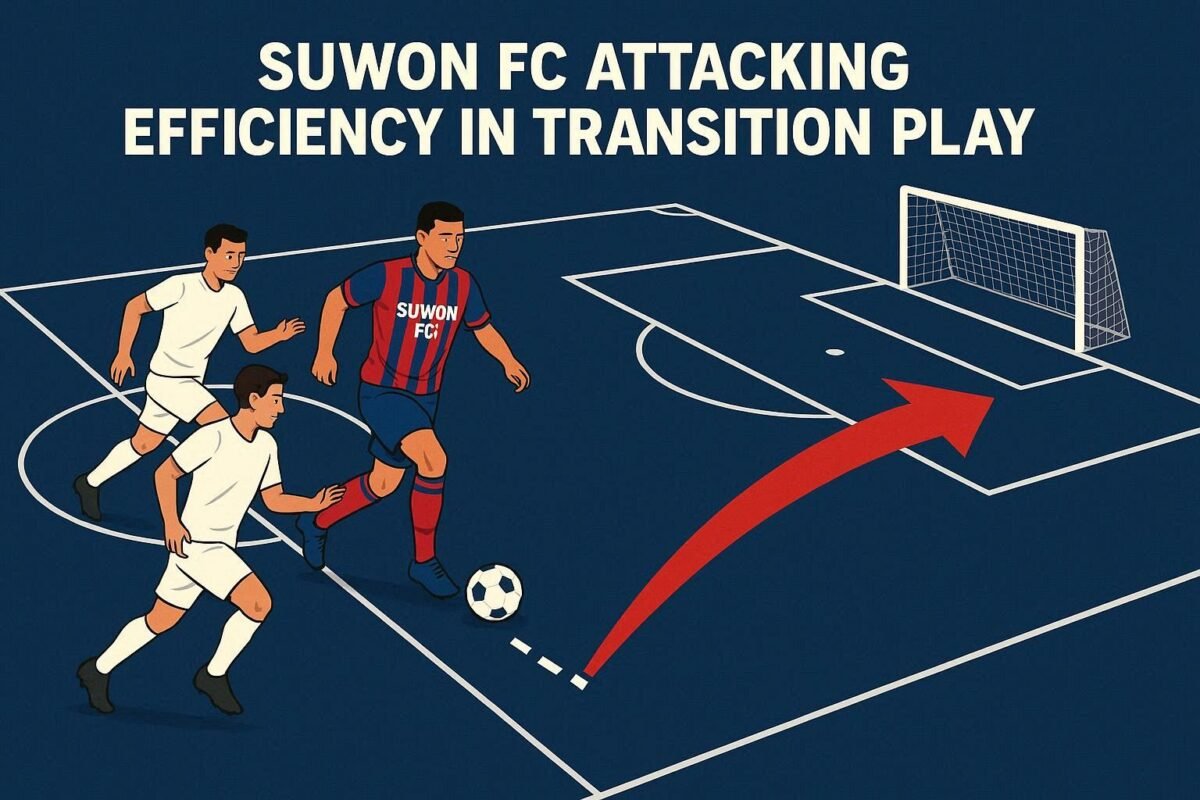
Transition play refers to the rapid shift from defense to attack, often triggered by turnovers. Suwon FC’s offensive profile emphasizes this approach:

  • Directness: Minimal passes between winning the ball and shooting.
  • Verticality: Quick progression upfield, exploiting space behind the opposition’s defensive line.
  • Exploiting Chaos: Targeting moments when opponents are least organized, maximizing chance quality.

This style contrasts with sustained buildup, where teams patiently circulate possession to create openings. Suwon’s philosophy is clear: efficiency thrives in chaos (The Analyst).

Shot Quality vs. Shot Quantity

The educational takeaway from Suwon’s performance lies in the analytics concept of shot quality versus shot quantity.

  • Shot Quantity: Teams like Manchester City often dominate possession and generate 20+ shots per game (Opta Analyst).
  • Shot Quality: Suwon’s 12 shots produced three goals because they were taken in high-value situations—close to goal, with defensive imbalance, or after turnovers.

Modern analytics emphasize expected goals (xG), a metric that assigns value to each shot based on location, angle, and defensive pressure. Suwon’s xG per shot was likely well above average, reflecting their focus on creating chances with higher conversion probabilities.

Case Study: The Three Goals

Breaking down Suwon’s goals against Yongin reveals the anatomy of transition efficiency.

  1. First Goal: A midfield turnover led to a three-pass sequence, ending with a striker through on goal. The shot was taken inside the box with minimal defensive pressure.
  2. Second Goal: Yongin lost possession near Suwon’s defensive third. A long ball exploited space behind the defense, and the winger finished clinically.
  3. Third Goal: A counterattack following a failed Yongin corner. Suwon transitioned from defense to goal in under 10 seconds, highlighting the speed and directness of their approach.

Each goal exemplified the principle: fewer touches, faster progression, higher shot value.

Comparative Analysis: League Trends

Suwon’s efficiency stands out in the K League 2 context. Many teams rely on volume shooting, believing that more attempts increase the likelihood of scoring. However:

  • League Average Goals-per-Shot: ~0.10–0.12 (FBref).
  • Suwon’s Match Ratio: 0.25.

This disparity illustrates how tactical identity can redefine success. Suwon’s approach may not produce the highest shot totals, but it maximizes conversion rates.

Educational Takeaway: Analytics in Action

For fans and students of football analytics, Suwon’s match offers a practical lesson:

  • Efficiency Metrics Matter: Goals-per-shot and xG per shot provide deeper insights than raw shot counts.
  • Transition Play Enhances Shot Quality: By attacking in moments of defensive disorganization, teams increase the likelihood of scoring.
  • Local Relevance: Suwon’s tactical identity gives Gyeonggi-do fans a framework to understand how analytics concepts apply directly to their club.

This case study reinforces the broader shift in football analysis: success is increasingly measured by efficiency, not volume.

Fan Perspective: Gyeonggi-do Identity

For Suwon FC supporters, the team’s attacking efficiency resonates with local pride. Suwon, a city known for its balance of tradition and modernity, finds in its football club a reflection of calculated precision.

  • Community Connection: Fans see their team as disciplined yet opportunistic, embodying resilience and pragmatism.
  • Educational Lens: Local supporters gain exposure to advanced analytics concepts, enriching their understanding of the game.
  • Cultural Symbolism: Suwon’s efficiency mirrors the city’s reputation for innovation and adaptability.

This tactical identity strengthens the bond between club and community, offering fans more than just entertainment—it provides intellectual engagement.

Tactical Risks and Rewards

Transition play carries inherent risks:

  • Rewards: High-value chances, efficient scoring, and psychological pressure on opponents.
  • Risks: Reliance on turnovers means fewer chances if opponents maintain possession discipline.

Suwon’s success depends on balancing these dynamics. Against teams with strong ball retention, they may struggle to generate opportunities. However, their efficiency ensures that when chances arise, they are maximized.

Broader Implications for the K League 2

Suwon’s performance has implications beyond a single match:

  • Tactical Diversity: Their style adds variety to the league, contrasting with possession-heavy teams.
  • Analytical Awareness: Matches like this encourage broader adoption of efficiency metrics among analysts and fans.
  • Competitive Balance: By maximizing shot quality, Suwon can challenge more resource-rich clubs, leveling the playing field.

This evolution reflects the global trend: analytics-driven efficiency is redefining football success (Stats Perform).

Historical Context: Suwon’s Tactical Evolution

Suwon FC’s identity has evolved over time. Historically, they were seen as a mid-table club, often overshadowed by Suwon Samsung Bluewings. However:

  • Recent Seasons: Emphasis on transition play has sharpened their competitive edge.
  • Analytical Adoption: Coaches increasingly integrate data into tactical planning.
  • Local Rivalries: Efficiency in attack distinguishes Suwon FC from their neighbors, carving out a unique identity.

For comparison, Suwon Samsung Bluewings have recently been praised for their defensive cohesion, a contrasting tactical identity that highlights the diversity of approaches within Suwon football culture (Suwon Insider).

Educational Framework for Fans

For fans in Suwon and Gyeonggi-do, the match against Yongin offers a framework to understand football analytics:

  1. Identify Shot Quality: Look beyond shot counts to assess chance value.
  2. Recognize Transition Moments: Observe how turnovers create high-value opportunities.
  3. Apply Efficiency Metrics: Use goals-per-shot and xG per shot to evaluate performance.

This framework empowers fans to engage with the game analytically, deepening their appreciation.

Future Outlook

Suwon FC’s attacking efficiency raises questions about sustainability:

  • Can They Maintain Efficiency? High conversion rates often regress to the mean.
  • Will Opponents Adapt? Teams may adjust by minimizing turnovers and tightening defensive transitions.
  • Can Suwon Diversify? Adding buildup play options could balance their reliance on transitions.

The future will test whether Suwon’s efficiency is a sustainable identity or a temporary advantage.

Conclusion

Suwon FC’s 3–1 victory over Yongin City was more than a win—it was a case study in attacking efficiency. Scoring three goals from 12 shots, they demonstrated how transition play and shot quality can redefine success. Their goals-per-shot ratio of 0.25, well above league average, highlights the value of efficiency metrics in modern football.

For fans in Suwon and Gyeonggi-do, this tactical identity offers both pride and education. It provides a lens to understand how analytics concepts like shot quality versus shot quantity shape outcomes. As the K League 2 evolves, Suwon FC’s efficiency-driven approach may inspire broader tactical and analytical shifts, ensuring that football in Korea continues to blend tradition with innovation.

Suwon Samsung Bluewings: Defensive Cohesion Driving K League 2 Form

Introduction

The Suwon Samsung Bluewings, one of Korea’s most storied football clubs, have entered the 2026 K League 2 season with a renewed sense of purpose. Their recent 1–0 victory over Yongin City marked their fourth consecutive clean sheet, extending a winning streak that has caught the attention of analysts and fans alike. For a team that struggled with defensive instability last season, this turnaround is more than a statistical anomaly — it is evidence of tactical recalibration and disciplined execution.

This article explores how the Bluewings’ defensive cohesion is shaping their form, why expected goals (xG) conceded offers a more reliable measure of defensive strength than possession statistics, and what this resurgence means for Suwon and the broader Gyeonggi-do football culture.

The Context: From Instability to Discipline

Last season, the Bluewings were plagued by defensive lapses. Their back line often appeared disjointed, conceding goals through poor spacing and inconsistent marking. Matches frequently turned into high-scoring affairs, with Suwon unable to protect leads or withstand sustained pressure.

Fast forward to the current campaign, and the contrast is stark. In their last four matches, the Bluewings have conceded only once, recording four clean sheets in succession. This defensive solidity has provided the foundation for their winning streak, allowing narrow victories like the 1–0 result against Yongin City to stand as testaments to resilience rather than luck.

Tactical Emphasis: Low-Block Organization

The key to Suwon’s transformation lies in their tactical emphasis on low-block organization and compact spacing. Rather than pressing high up the pitch or relying on possession dominance, the Bluewings have adopted a more conservative structure:

  • Compact defensive lines: The back four remain closely spaced, minimizing gaps between defenders.
  • Midfield screening: Defensive midfielders drop deep to shield the back line, forcing opponents into wide areas.
  • Reduced shot quality: By crowding central zones, Suwon limits opponents to lower-value shots from distance or tight angles.

This approach does not eliminate opponent possession but neutralizes its effectiveness. Teams may dominate the ball, but Suwon’s structure ensures that possession translates into fewer high-quality scoring chances.

Expected Goals (xG) Conceded: A Better Measure of Defensive Strength

Traditional metrics like possession percentages often mislead fans into equating ball control with defensive solidity. In reality, possession can mask vulnerabilities if opponents generate high-quality chances during limited spells of attack.

This is where expected goals (xG) conceded becomes invaluable. xG measures the probability of a shot resulting in a goal based on factors such as distance, angle, and defensive pressure. For Suwon:

  • Low xG conceded: Their compact defensive shape reduces the likelihood of opponents creating high-probability chances.
  • Consistency across matches: Even when opponents enjoy possession, Suwon’s defensive discipline keeps xG conceded low, reflecting genuine strength.
  • Educational takeaway: Fans can learn that defensive success is not about denying possession but about denying quality opportunities.

For readers unfamiliar with xG, resources like StatsBomb’s introduction to expected goals (statsbomb.com in Bing) provide accessible explanations of how the metric works and why it matters.

Case Study: The 1–0 Victory Over Yongin City

The match against Yongin City exemplifies Suwon’s defensive philosophy. Yongin enjoyed stretches of possession and attempted to break down Suwon’s lines, but the Bluewings consistently forced play into wide areas.

  • Shot profile: Yongin’s attempts came largely from outside the penalty area, with low xG values attached.
  • Defensive interventions: Suwon’s center-backs excelled in aerial duels, clearing crosses and limiting second-ball opportunities.
  • Game management: Once Suwon secured the lead, their defensive structure absorbed pressure without resorting to reckless challenges.

This disciplined approach ensured that a single goal was enough to secure victory, underscoring the value of defensive cohesion in tight matches.

Historical Perspective: Suwon’s Defensive Identity

The Bluewings’ current form resonates with their historical identity. Traditionally, Suwon has been known for disciplined, organized football, with defensive resilience forming the backbone of their successes in the K League 1.

Their recent struggles in K League 2 reflected a departure from this identity, as tactical instability undermined their reputation. The current resurgence, therefore, is not just a tactical adjustment but a return to the club’s cultural roots — a reminder that defensive discipline remains central to Suwon’s footballing philosophy.

Educational Insight: Why Defensive Cohesion Matters in League Structures

For readers new to football analytics, Suwon’s resurgence offers a practical lesson in how defensive cohesion shapes league outcomes:

  • League format: In K League 2, where promotion battles hinge on consistency, defensive solidity ensures points accumulation even in low-scoring matches.
  • Goal difference impact: Clean sheets contribute to favorable goal difference, a critical tiebreaker in league standings.
  • Psychological effect: Teams with strong defenses build confidence, knowing that a single goal can secure victory.

For context on how Korean league structures operate, the official K League site provides detailed breakdowns of promotion, relegation, and playoff formats.

Suwon and Gyeonggi-do: Regional Significance

As one of Suwon’s flagship clubs, the Bluewings’ resurgence carries regional significance. Football in Gyeonggi-do thrives on community identity, with clubs serving as cultural anchors.

  • Fan culture: Clean sheets and disciplined victories resonate with fans who value resilience and collective effort.
  • Regional pride: Suwon’s success reinforces Gyeonggi-do’s reputation as a hub of competitive football.
  • Educational relevance: For local readers, the Bluewings’ form illustrates how tactical discipline can reshape trajectories, offering lessons in both sports and community resilience.

This regional identity also connects to broader discussions of league structures and playoff systems, as explored in resources like Suwon KT Wiz and KBL Playoff Structures, which highlight how organizational frameworks shape outcomes across different sports in Gyeonggi-do.

Broader Implications: Lessons for Korean Football

Suwon’s resurgence also offers broader lessons for Korean football:

  • Tactical diversity: Their low-block approach contrasts with high-pressing strategies, showing that multiple tactical models can succeed.
  • Analytical adoption: The emphasis on xG conceded reflects the growing role of analytics in Korean football, aligning with global trends.
  • Cultural resonance: Defensive discipline aligns with values of perseverance and collective effort, reinforcing football’s cultural significance in Korea.

For readers interested in the global analytics movement, The Athletic’s coverage of football analytics offers case studies on how clubs worldwide are adopting similar approaches.

Conclusion

The Suwon Samsung Bluewings’ defensive cohesion is driving their K League 2 form, transforming instability into resilience. Their emphasis on low-block organization and compact spacing has reduced opponent shot quality, resulting in four consecutive clean sheets.

For fans and analysts, the key takeaway is that expected goals (xG) conceded offers a more reliable measure of defensive strength than possession statistics, providing deeper insight into tactical effectiveness.

As Suwon reclaims its defensive identity, the club’s resurgence underscores how tactical discipline can reshape trajectories, offering lessons for Gyeonggi-do, Korean football, and fans seeking to understand the structures that define the game.