

Introduction: Recent Match Context
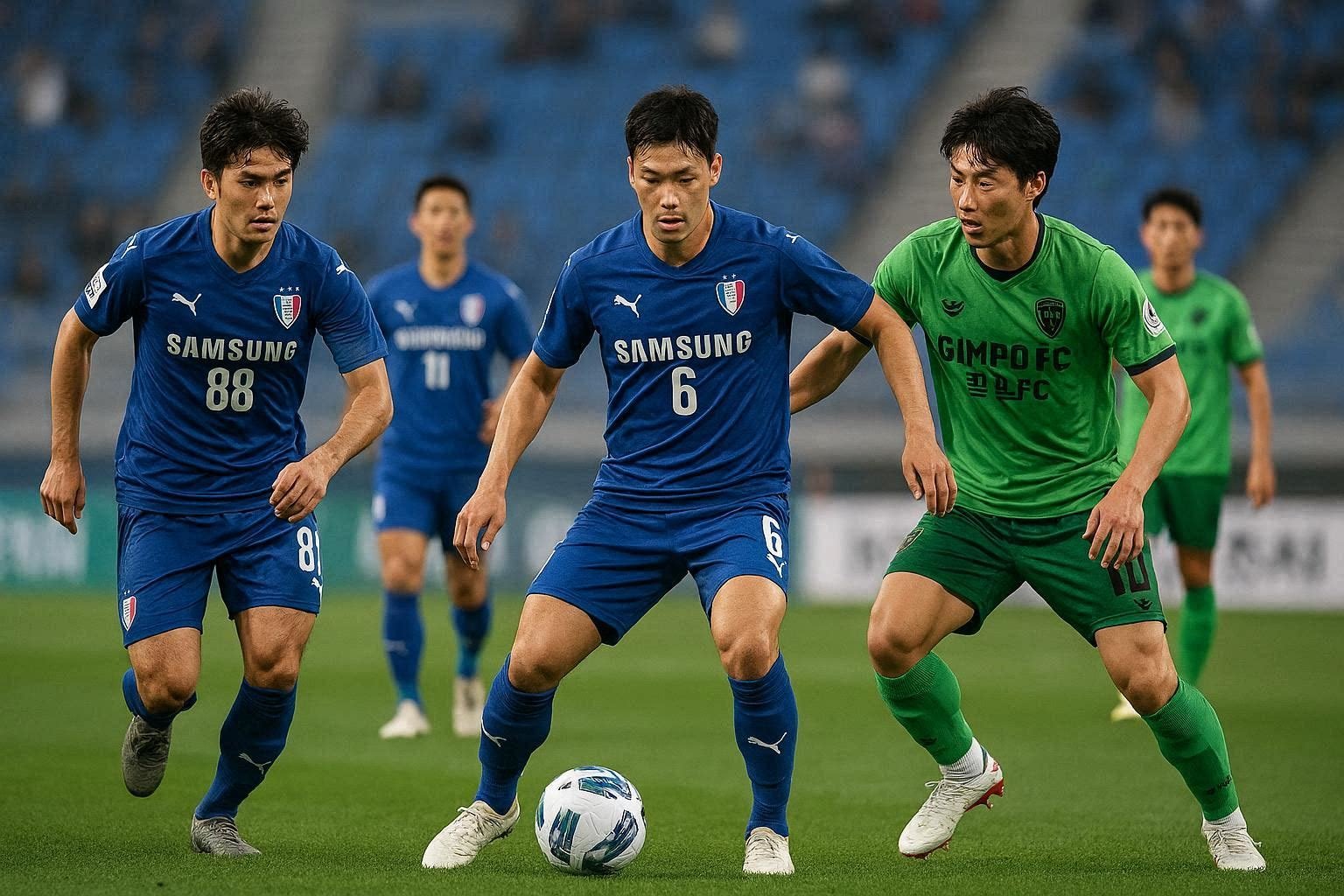
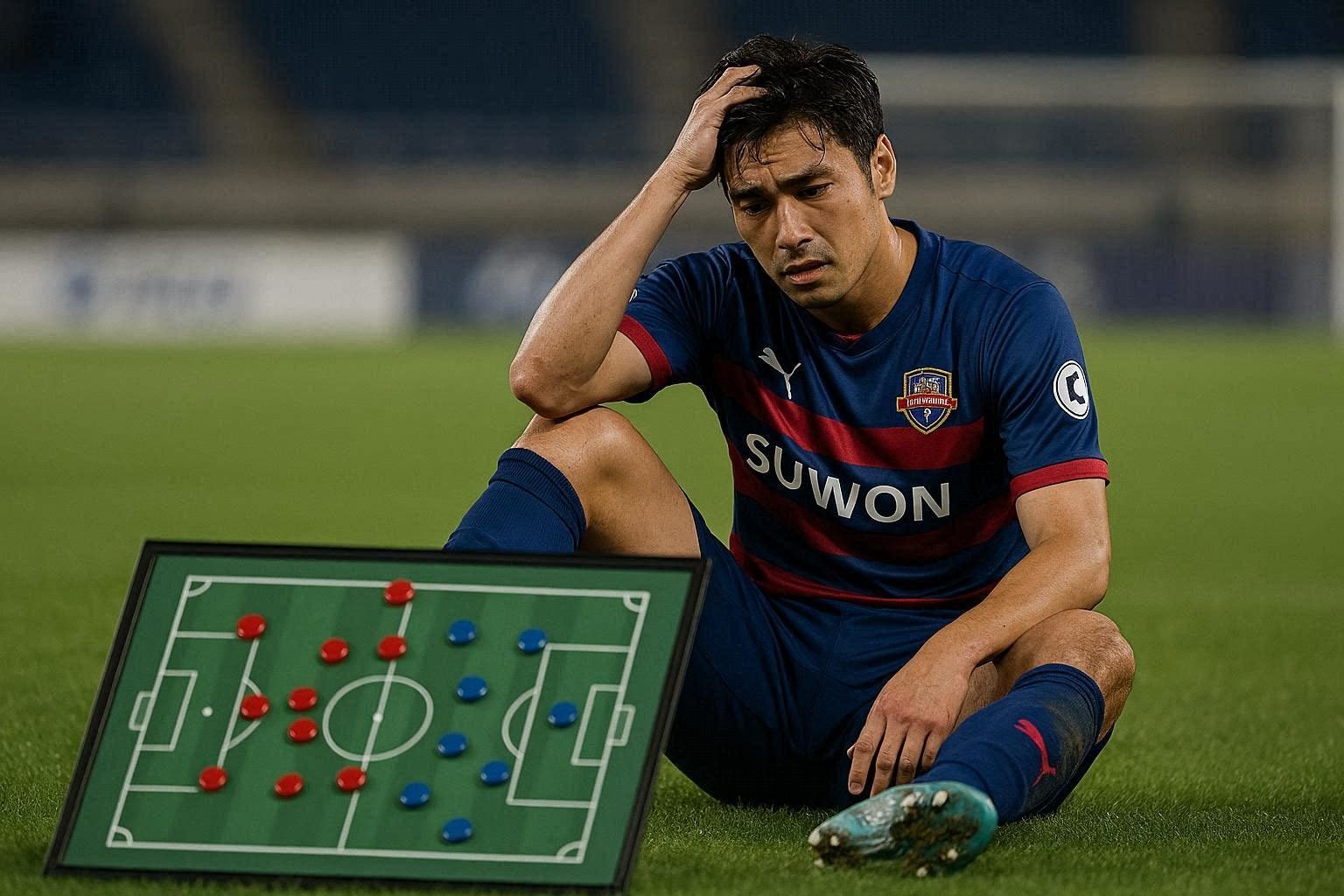
On April 18, Suwon FC drew 2–2 with Daegu FC before collapsing 3–0 against Seoul E‑Land. These back‑to‑back fixtures didn’t just highlight inconsistency in results; they exposed deeper tactical flaws. Suwon’s preferred 4‑2‑3‑1 system is leaving dangerous gaps between midfield and defense, and opponents who press high or counter quickly are exploiting those spaces with ruthless efficiency. For a detailed breakdown of the Daegu match itself, see Suwon FC vs. Daegu FC Tactical Breakdown in K League 2.
1. The 4‑2‑3‑1 Blueprint and Suwon’s Application
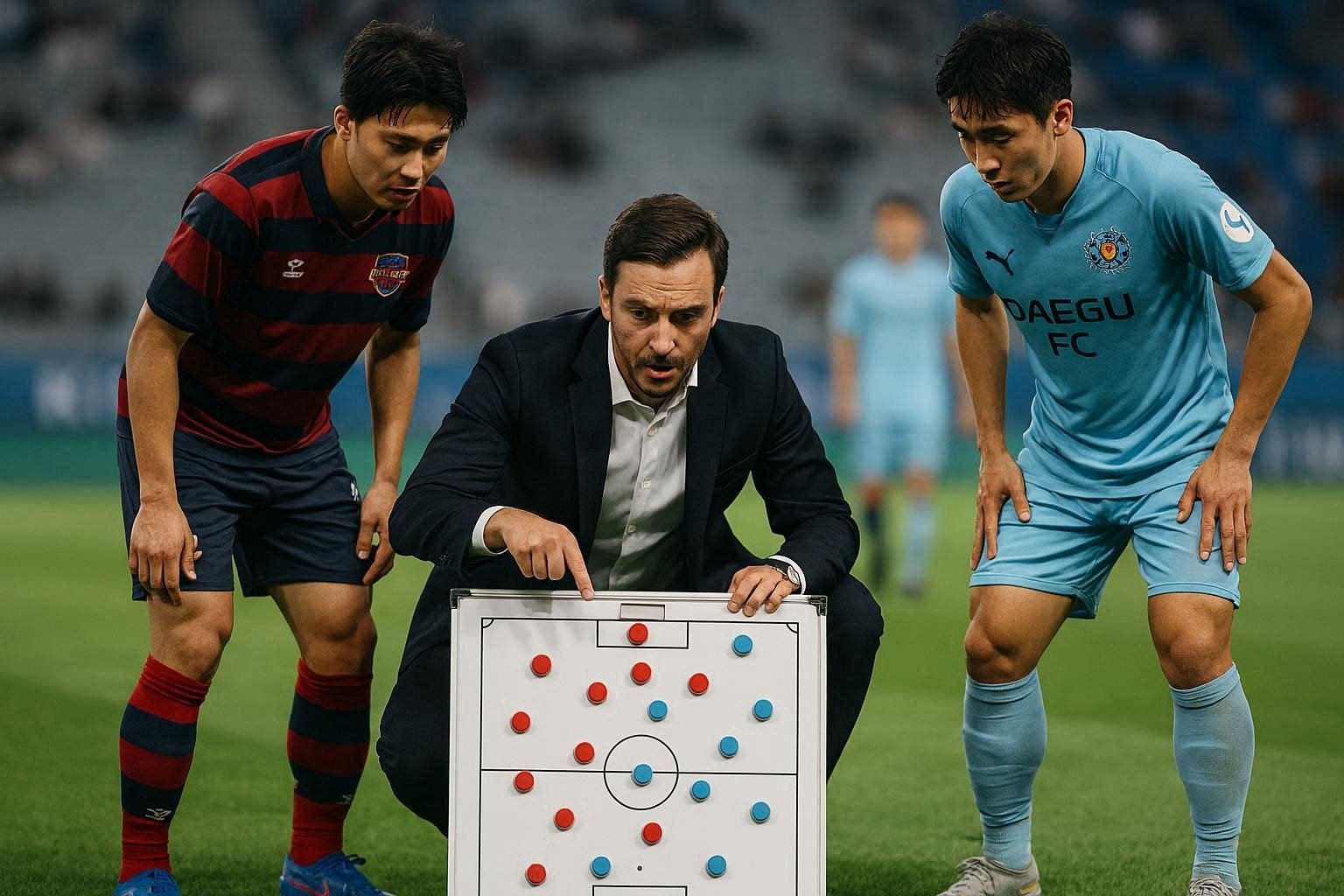
The 4‑2‑3‑1 is one of modern football’s most common formations. Two holding midfielders shield the back line, three attacking midfielders provide creativity and width, and a lone striker leads the line. In theory, it balances defense and attack.
Suwon FC, however, use the system to emphasize possession. They build patiently from the back, circulate the ball through midfield, and rely on their attacking trio to create chances. The problem is structural: when both holding midfielders push forward or when fullbacks overlap aggressively, the defensive shield collapses. The space in front of the center‑backs becomes a free zone for opponents to exploit. For background on how the 4‑2‑3‑1 has evolved globally, see UEFA’s tactical analysis resources.
2. Data Exposes the Weakness
Numbers tell the story. Across their last five matches, Suwon have conceded an average of 1.8 goals per game. More telling is how those goals arrive. When pressed high, Suwon’s pass completion drops below 70%, leading to turnovers in dangerous zones.
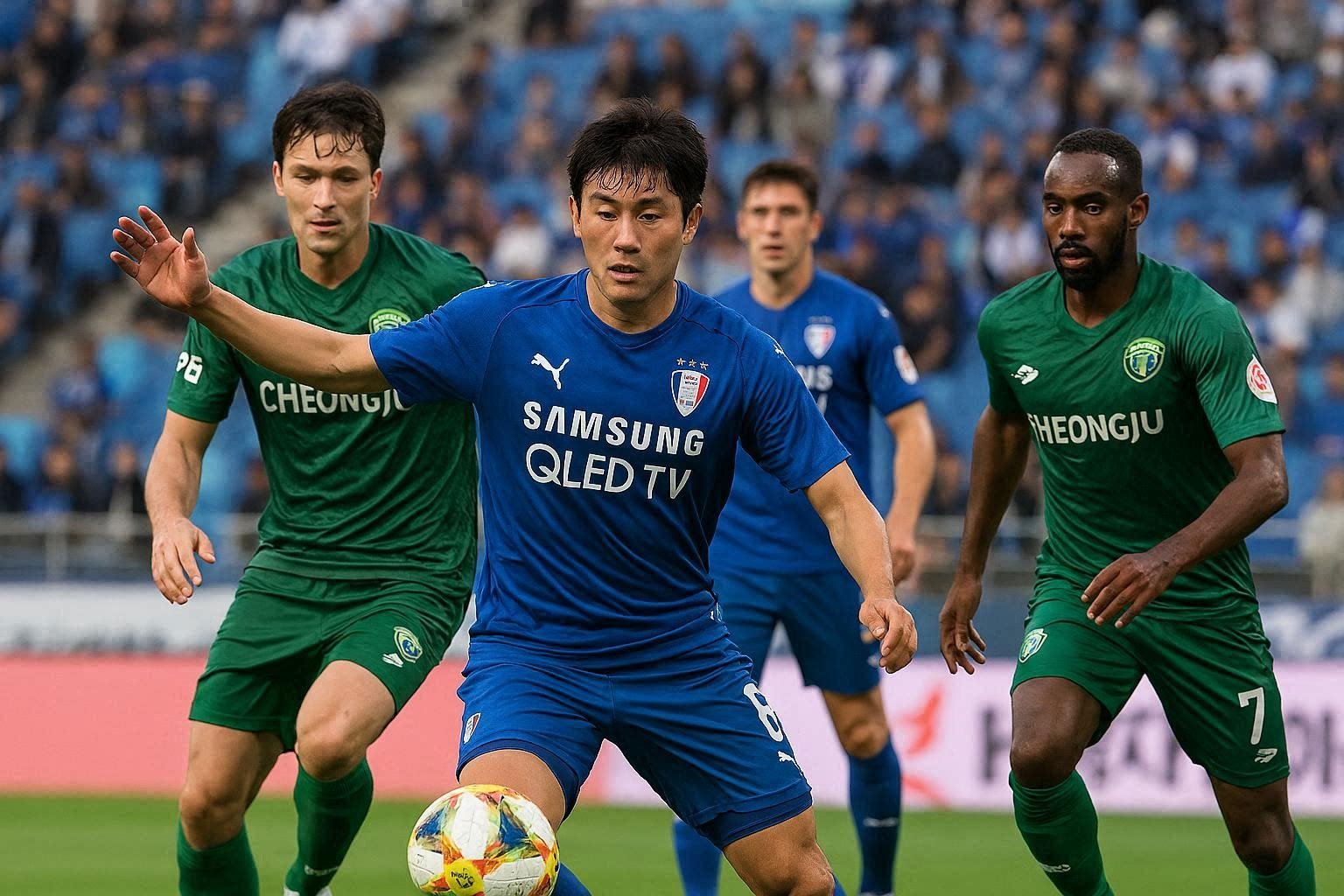
Against Seoul E‑Land, Suwon enjoyed 55% possession in the opening half hour but repeatedly lost the ball under pressure. E‑Land’s expected goals (xG) surged to 2.1 by halftime, reflecting the quality of chances created from those turnovers. The eventual 3–0 scoreline was not a surprise; it was the logical outcome of structural fragility. For readers new to advanced metrics, Opta’s guide to expected goals explains how xG is calculated and why it matters.
3. Defensive Transition: The Core Problem
The most glaring issue is Suwon’s defensive transition. When possession is lost, the midfield and back line often stretch 20 meters apart. That gap is a gift to opponents.
In the Daegu match, the attacking midfielder repeatedly found space between Suwon’s lines, launching two decisive shots that led to goals. The draw was salvaged only by Suwon’s attacking talent, not by tactical resilience. The pattern is clear: Suwon’s system collapses when the double pivot fails to hold position. For comparison, see how K League official reports highlight transition play as a decisive factor in recent fixtures.
4. Tactical Recalibration: What Needs to Change
To stabilize, Suwon must recalibrate their 4‑2‑3‑1. Three adjustments stand out:
- Redefine the double pivot. One midfielder must remain anchored in front of the defense at all times. Without a designated “screen,” the center‑backs are exposed.
- Control fullback advances. Overlapping runs should be staggered. If one fullback pushes forward, the other must stay deeper to maintain balance.
- Develop a Plan B under pressure. When opponents press high, Suwon cannot insist on short passes. They need rehearsed alternatives: longer diagonals, quicker vertical balls, or even direct play to bypass the press.
For coaching insights on adapting formations, the Asian Football Confederation’s technical reports provide case studies from across the region.
5. Educational Lens: xG and Defensive Efficiency
For fans, understanding Suwon’s struggles requires grasping two key concepts: expected goals (xG) and defensive efficiency.
- xG quantifies the likelihood of a shot becoming a goal. High xG chances usually come from close range or clear one‑on‑one situations.
- Defensive efficiency measures how well a team limits both the quantity and quality of shots conceded.
Suwon’s issue is not possession or shot creation; it’s that their opponents are generating high‑quality chances. Allowing an average opponent xG of 1.9 per match means Suwon’s defense is consistently giving up opportunities that should result in goals. Fans who look only at possession stats miss the bigger picture: control of the ball is meaningless if it leads to defensive exposure. For a broader educational primer, see FIFA’s technical study group reports.
6. Tactical Identity vs. League Reality
Suwon FC’s identity has long been tied to attacking football. Fans appreciate the ambition, but K League 2 is unforgiving. Promotion battles reward consistency and defensive solidity. Teams like Seoul E‑Land have learned to exploit Suwon’s adventurous style by pressing aggressively and countering into open spaces.
If Suwon cling to possession without addressing defensive gaps, they risk falling behind in the promotion race. Tactical identity must evolve to meet competitive reality. For context on promotion battles, K League 2 standings and statistics provide the competitive picture.
7. Fan Culture and Tactical Literacy
Interestingly, fan communities are increasingly discussing these tactical nuances. Online forums dissect xG charts, midfield spacing, and pressing triggers. This reflects a broader shift in Korean football culture: supporters are not just cheering; they’re analyzing.
Suwon’s struggles, then, become a case study for fans learning how formations and transitions shape outcomes. Understanding why a 4‑2‑3‑1 can fail under pressure deepens appreciation of the sport and elevates fan discourse beyond surface‑level commentary. For a cultural perspective, the Ministry of Culture, Sports and Tourism offers resources on how sports analysis is shaping fan engagement in Korea.
8. Lessons for Players and Coaches
For Suwon’s coaching staff, the lesson is clear: tactical rigidity is dangerous. The 4‑2‑3‑1 must be adapted to the squad’s strengths and the league’s demands. Training sessions should emphasize:
- Compactness in transition. Midfielders must collapse quickly to close gaps.
- Press resistance. Players need rehearsed passing patterns to escape high pressure.
- Situational awareness. Fullbacks and pivots must read the game and adjust positioning dynamically.
For players, the challenge is mental as much as physical. Recognizing when to hold shape versus when to attack is the difference between conceding and controlling.
9. Broader Implications for K League 2
Suwon’s case illustrates a broader truth about K League 2: tactical sophistication is rising. Teams are no longer content to sit deep; they press, counter, and exploit structural weaknesses. Possession football, once a hallmark of superiority, is now a risk if not paired with defensive discipline.
This evolution makes the league more competitive and educational for fans. Watching Suwon struggle is frustrating for supporters, but it also highlights how tactical details decide matches.
Conclusion: The Road Ahead
Suwon FC’s recent results are more than blips; they are warnings. The 4‑2‑3‑1 system, applied without balance, is exposing the team to repeated punishment. Unless recalibrated, Suwon will continue to concede heavily against pressing and counterattacking opponents.
For fans, the takeaway is equally important: football is not just about possession or star players. It is about structure, transitions, and efficiency. Suwon’s tactical struggles are a reminder that formations are frameworks, not guarantees. Success depends on how those frameworks are executed under pressure.
As the season unfolds, the question is whether Suwon can adapt. Their promotion hopes hinge not on scoring more goals, but on conceding fewer — and that requires tactical discipline as much as attacking flair.