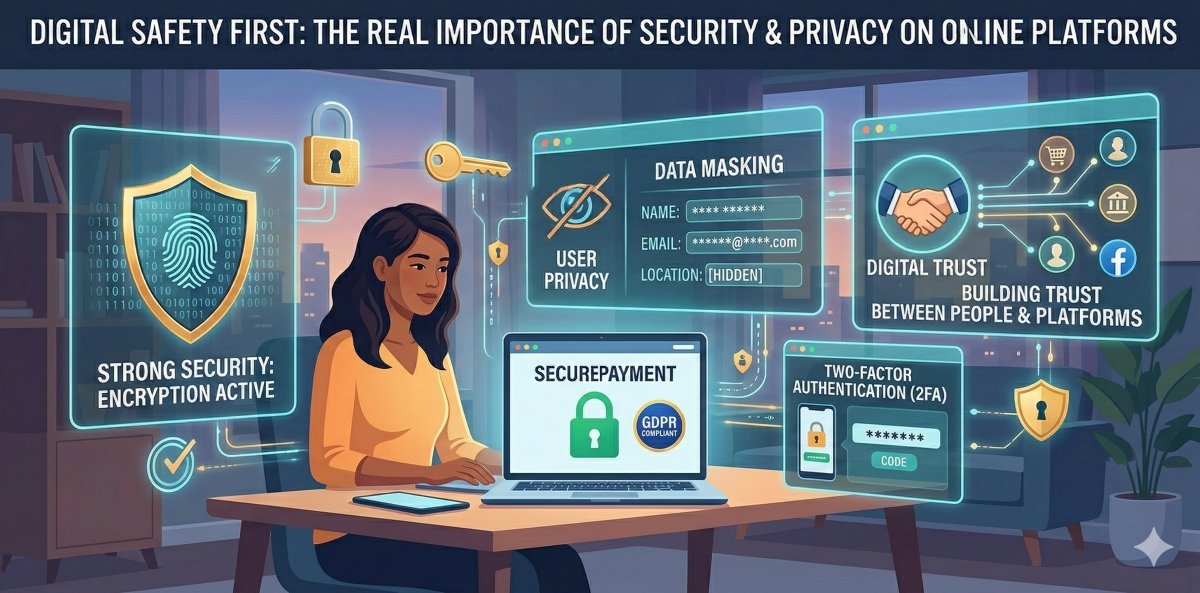

Digital Safety First: The Real Importance of Security and Privacy on Online Platforms

In today’s connected world, we rely on websites and apps for nearly everything—shopping, streaming, chatting with friends, and even paying bills. Each time we log in, we hand over personal information to an online platform. This exchange is a form of digital trust, and when platforms fail to protect it, the consequences can be serious.

Think of your personal data as the key to your home. If a platform leaves that key exposed, anyone can copy it. Now imagine millions of keys left unguarded. This is why security and privacy are not optional—they are the most critical features any digital company must provide.

Trust: The Foundation of Digital Life

Trust underpins the entire internet economy. If you suspected an online store might leak your credit card details, you wouldn’t shop there. When companies suffer data breaches, that trust is broken. To prevent this, businesses invest heavily in firewalls, encryption, and monitoring tools—not only to protect your account but also to safeguard their own reputation and future.

The Real Cost of Poor Security

Weak security doesn’t just risk money—it can affect your identity, safety, and peace of mind. Here are the most common dangers:

Identity Theft

If criminals gain access to your full name, birth date, address, and ID numbers, they can impersonate you. They might open credit cards or take out loans in your name, leaving you with the debt. Recovering from identity theft can take years and significant legal costs.

Account Takeovers

Attackers often use stolen passwords from one site to access others where you reused the same login. A compromised social media password could give them entry into your banking app, allowing them to drain your account instantly.

Phishing Scams

Hackers frequently exploit stolen email lists to send fake messages that look legitimate. These “phishing” emails trick users into clicking links to verify accounts or claim prizes, leading to fraudulent sites that steal more personal data.

Emotional Distress

Beyond financial harm, breaches can expose private conversations, photos, or health records. The emotional impact of knowing strangers have accessed intimate information can be devastating and long-lasting.

Security vs. Privacy: Knowing the Difference

Security and privacy are related but distinct. A trustworthy platform must deliver both:

  • Security: The protective wall around your data, built with tools like encryption and two-factor authentication (2FA). For example, 2FA requires both your password and a code sent to your phone, making stolen passwords useless on their own.
  • Privacy: How a company uses your data once it’s secured. Strong security means hackers can’t access your location, but poor privacy means the company might sell that information to advertisers without your consent.

In the European Union, GDPR laws safeguard privacy rights, including the “right to be forgotten,” which allows you to request deletion of your personal data. Responsible companies demonstrate respect for privacy with clear, transparent policies.

Key Terms of Digital Safety

TermWhat It IsHow It Protects You
EncryptionScrambles your data into unreadable codeEven if stolen, it cannot be read
Two-Factor Authentication (2FA)A second verification step (e.g., code to your phone)Makes stolen passwords ineffective
Privacy PolicyExplains how your data is usedShows whether a company respects your choices
GDPRStrict European privacy lawGives you control over your personal data

Conclusion

Digital safety is a shared responsibility. Platforms must prioritize strong security and transparent privacy practices, but users also play a role. By creating unique passwords, enabling 2FA, and staying cautious with links, we can build safer online habits. A platform that puts security and privacy first is more than a service—it’s a trusted partner in your digital life.
Global Sports Betting Legalization Status and Case Studies by Country

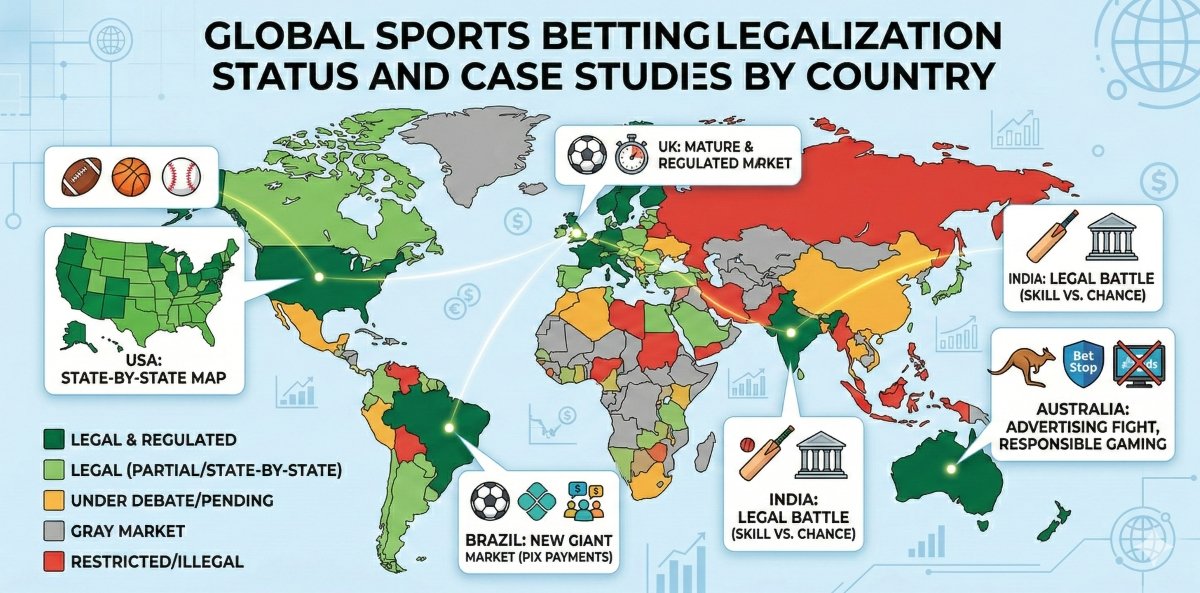
By 2026, the global landscape of sports betting looks very different than it did just a few years ago. Governments worldwide have recognized that people will bet on sports regardless of legality. Instead of fighting it, many countries now regulate betting to protect players, reduce illegal activity, and generate billions in tax revenue. Each nation, however, has taken its own approach.

The United States: A Patchwork of Rules

The U.S. is one of the most notable examples of rapid change. Since the federal ban was lifted, states have rushed to establish their own regulations. By early 2026, more than 30 states had fully launched mobile betting apps.

Missouri is a recent success story. After voters approved legalization in late 2024, online betting went live in December 2025. Fans in St. Louis can now place regulated bets directly from their phones at stadiums. Yet, major states like California and Texas remain without legal markets due to ongoing political debates, creating a patchwork system where betting is legal in one state but prohibited across the border.

The United Kingdom: A Mature Market Focused on Safety

The UK represents a mature market where betting has been legal for decades. With growth already established, the government now emphasizes safety and oversight.

In April 2026, the UK raised the tax on online gaming to 40 percent, aiming to discourage companies from pushing high-risk games such as digital slots. New affordability checks also require operators to verify whether players can realistically afford their wagers. For example, if a young fan deposits an unusually large sum, the system may pause their account. In the UK, “legal” now also means “supervised.”

Brazil: South America’s New Giant

Brazil has become one of the most dynamic stories in global betting. For years, millions of Brazilians relied on offshore “grey market” sites. In January 2025, the government launched a fully regulated system.

By 2026, Brazil had licensed more than 75 operators under strict rules. Credit cards are banned, with payments limited to debit cards or the local instant system Pix, preventing overspending. The government collects 12 percent of operator revenue, which is reinvested into schools, police, and sports programs—making legalization a tool for social improvement as well as entertainment.

India: At a Legal Crossroads

India’s situation is more complex. With millions of cricket fans, demand is enormous, but laws remain tangled. In 2025, a new online gaming law was passed but quickly challenged in court.

By early 2026, the Supreme Court was debating whether fantasy sports and similar games are based on “skill” or “chance.” Skill-based games are often legal, while chance-based games are treated as gambling and may be banned. Meanwhile, a 28 percent tax on deposits has strained smaller companies, highlighting India’s struggle to balance regulation with accessibility.

Australia: Tackling Advertising Fatigue

Australia has one of the highest betting participation rates globally. With such widespread activity, fans complained of “ad fatigue,” saying broadcasts were saturated with betting promotions.

In 2026, Australia introduced strict advertising rules, banning betting ads during times when children are likely to watch. Credit card betting was also prohibited nationwide. The country now operates “BetStop,” a national registry allowing individuals to self-exclude from all betting apps with a single action.

Summary of Global Status

CountryStatus in 2026Primary Focus
USAState-by-state legalizationRapid expansion and tax revenue
UKFully regulatedHigh taxes and affordability checks
BrazilNewly regulatedPix payments and social reinvestment
IndiaOngoing legal battleSkill vs. chance debate
AustraliaHighly regulatedAd restrictions and credit card bans

The global trend is clear: sports betting is moving into the open. By establishing clear rules, countries are transforming a once-controversial activity into a regulated industry that supports safety, generates revenue, and even funds social programs.

The Basics of Sports Data and How it Changes Games

Fans love sports for the action—the goals, the home runs, the buzzer-beaters. But behind the scenes, another player has transformed the game: data. Sports data analysis is the process of collecting information from matches and turning it into numbers. These numbers help teams understand past performance and predict future outcomes.

The Beginning of the Data Era

One of the most famous stories about data in sports comes from baseball’s Oakland Athletics. In the early 2000s, the team had limited resources and couldn’t afford star players. Manager Billy Beane turned to statistics, identifying undervalued athletes with overlooked skills—like drawing walks to first base. By building a roster based on numbers rather than reputation, the A’s competed successfully against wealthier teams. This approach, later popularized in Moneyball, changed sports forever.

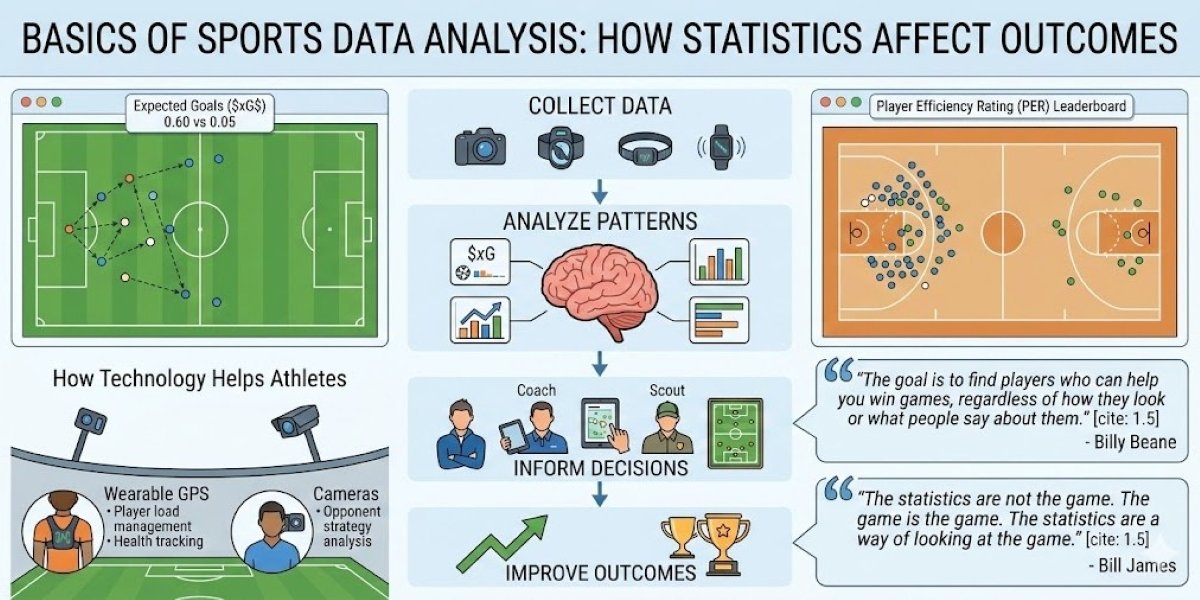
“The goal is to find players who can help you win games, regardless of how they look or what people say about them,” said Billy Beane.

Today, every major professional team uses data analysis. It’s no longer a secret weapon—it’s essential for staying competitive.

How Data Changes the Way Games Are Played

Statistics don’t just record history; they shape strategy. In the past, coaches relied on instinct. Now, they rely on real-time data.

In basketball, analytics revealed that three-point shots are more efficient than long two-pointers. As a result, players now attempt far more threes, changing the pace and spacing of the game.

In soccer, teams use “Expected Goals” (xG) to measure the quality of scoring chances. A long-range shot might have an xG of 0.05 (5% chance of scoring), while a close-range shot could be 0.60. Coaches use this data to encourage smarter shot selection and better positioning.

The Technology Behind the Numbers

Data comes from advanced technology. Stadiums are equipped with cameras that track every movement, while athletes wear sensors that monitor performance and health.

Type of TechWhat It TracksWhy It Matters
GPS TrackersDistance and speedHelps prevent fatigue and overtraining
Optical CamerasBall and player movementImproves tactical decisions and team strategy
Heart MonitorsStress and fatigue levelsGuides rest and recovery to avoid injury

If data shows a player slowing down or experiencing high stress, coaches can rest them to prevent injury and ensure peak performance during critical games.

Key Statistics to Know

Different sports rely on different metrics. Here are a few widely used examples:

  • Wins Above Replacement (WAR): Baseball stat showing how many wins a player adds compared to an average replacement.
  • Player Efficiency Rating (PER): Basketball metric combining positive contributions (points, rebounds) and subtracting negatives.
  • Completion Percentage Over Expected (CPOE): Football stat measuring whether a quarterback completes difficult passes beyond the expected rate.

“The statistics are not the game. The game is the game. The statistics are a way of looking at the game,” said Bill James, a pioneer of sports analytics.

Why Fans Care About Data

Data isn’t just for coaches—it’s for fans too. Fantasy sports rely on real-life statistics, allowing fans to build “dream teams” and compete based on player performance. Betting platforms also use historical data to estimate outcomes, turning games into puzzles that fans can analyze and debate.

The Limits of Statistics

Numbers are powerful, but they aren’t perfect. Sports are played by humans, not machines. A player might underperform due to personal issues, or a team might win thanks to luck. Data can predict likelihoods, but it can’t guarantee results.

The best teams balance analytics with human judgment, combining insights from scouts, coaches, and veteran players with statistical models.

Looking to the Future

As technology advances, sports analytics will become even more sophisticated. Artificial intelligence may soon predict injuries before they happen or suggest optimal plays in real time. For now, understanding the basics of sports data helps fans and professionals alike see the game more clearly. Winning is not just about strength—it’s about being smart with information.