

Match Context and Result
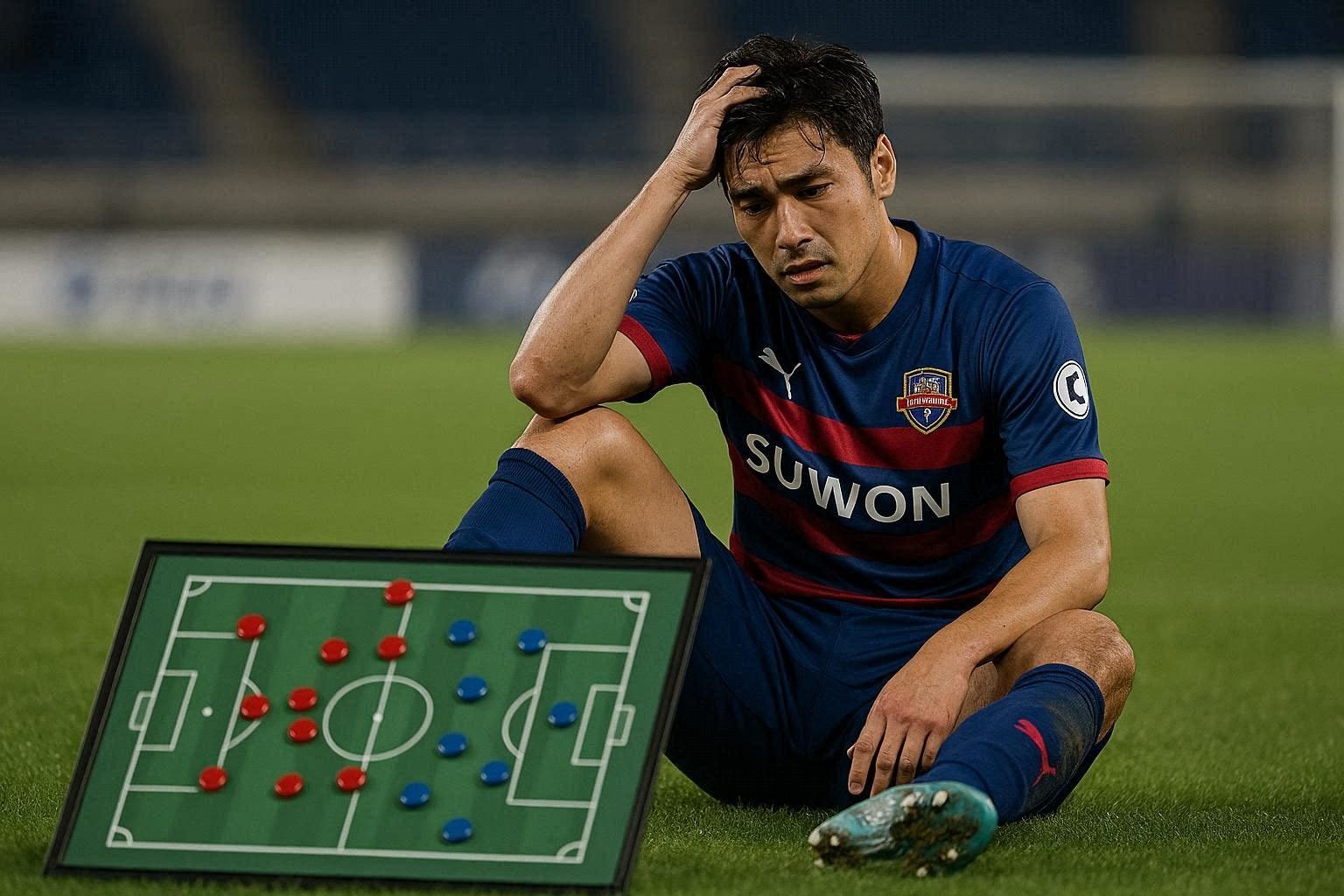
On April 4, 2026, Suwon FC’s unbeaten run in the K League 2 came to a sudden halt at the hands of Seoul E-Land. The final scoreline — Seoul E-Land 3–0 Suwon FC — was more than just a numerical defeat. It was a tactical unraveling that exposed the structural weaknesses of Suwon’s high-pressing, possession-oriented system. For a side that had built momentum through dominance of the ball and relentless pressing, this match served as a sobering reminder of how quickly those strengths can turn into vulnerabilities when confronted with direct, vertical play.
The Match Narrative
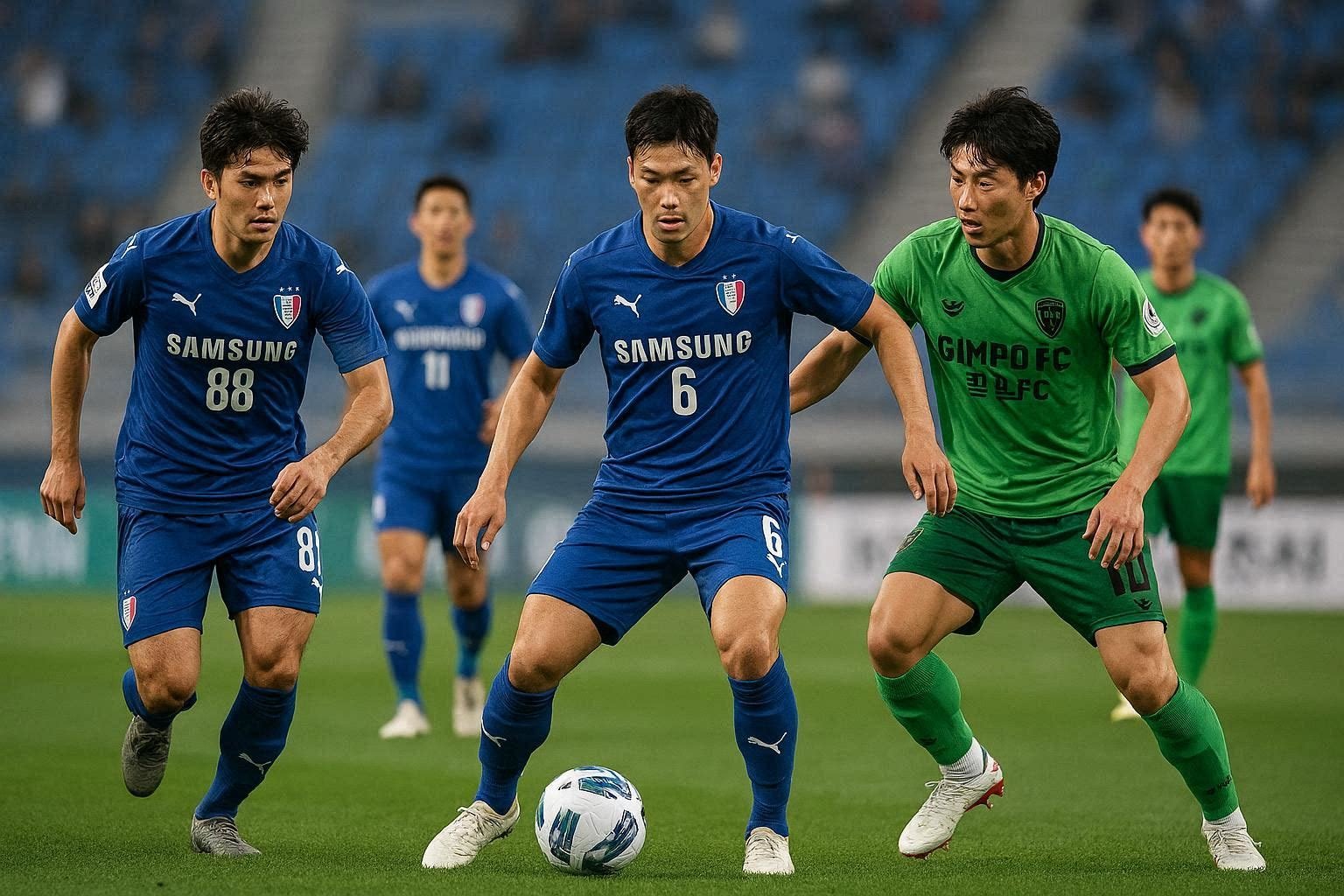
From the opening whistle, Suwon FC sought to impose their usual rhythm: aggressive pressing in the opposition half, quick recycling of possession, and positional rotations designed to stretch Seoul E-Land’s defensive lines. For the first 15 minutes, the approach seemed effective. Suwon pinned E-Land deep, forcing hurried clearances and winning second balls.
But football is often about the moments when pressure is absorbed and then flipped. Seoul E-Land, rather than panicking, leaned into a pragmatic plan: bypass Suwon’s press with direct passing sequences. Instead of trying to build slowly from the back, E-Land’s defenders and midfielders looked for vertical outlets — sharp passes into the channels, long diagonals toward the forwards, and quick lay-offs that immediately transitioned the team into attacking zones.
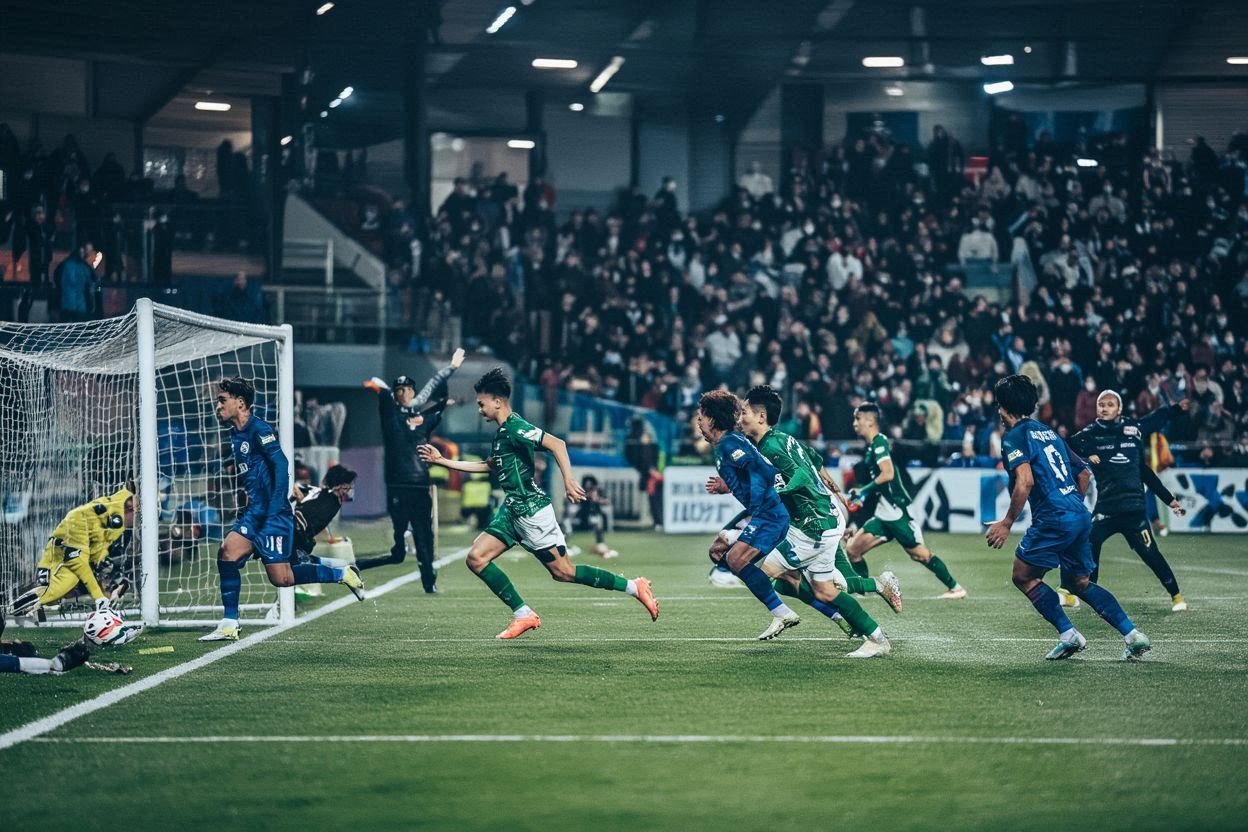
By the 20th minute, the cracks in Suwon’s system began to show. Their defensive line, stretched high to support the press, left acres of space behind. Seoul E-Land’s first goal came from precisely this scenario: a direct ball over the top caught Suwon’s center-backs scrambling, and a composed finish put the home side ahead. The second goal, just before halftime, followed a similar pattern — Suwon lost possession in midfield, E-Land transitioned vertically in two passes, and Suwon’s retreating defenders could not recover in time.
The third goal in the second half sealed the contest. Again, it was not the product of elaborate buildup but of exploiting transitional disorganization.
Suwon’s fullbacks had advanced, their midfield pivot was bypassed, and E-Land’s forwards found themselves in a 3v2 situation. Clinical execution made it 3–0, and Suwon’s unbeaten run was over.
Tactical Analysis: Why Suwon’s Press Failed
The defeat was not simply about missed chances or individual errors. It was systemic. To understand why Suwon’s pressing game collapsed, we need to break down the mechanics of their approach and how Seoul E-Land countered it.
- High Pressing Without Compactness: Suwon’s pressing intensity was admirable, but pressing requires compactness.
Their forwards pressed high, but the midfield did not consistently squeeze up, leaving exploitable gaps. - Defensive Transitions Exposed: Suwon’s transition defense was sluggish. Midfielders were caught ahead of the ball,
leaving defenders isolated against E-Land’s forwards. - Vertical Play as the Antidote: Seoul E-Land embraced verticality — moving the ball forward quickly, often skipping buildup phases.
This neutralized Suwon’s pressing traps. - Psychological Impact of Early Goals: Once E-Land scored, Suwon’s pressing became frantic, compounding their structural flaws.
Educational Value: Lessons in Tactical Balance
For readers learning about football tactics, this match is a textbook case of how pressing intensity must be balanced with defensive compactness.
Pressing Intensity
- Definition: The degree to which a team applies pressure on the ball carrier and surrounding players.
- Benefit: Forces opponents into mistakes, wins possession high up the pitch.
- Risk: If pressing is not coordinated, opponents can bypass it with one or two passes.
Defensive Compactness
- Definition: The ability of a team to maintain short distances between lines and players.
- Benefit: Ensures defenders are close enough to recover if the press is broken.
- Risk: Without compactness, pressing becomes disjointed and exploitable.
Balance Between the Two
The Suwon–E-Land match illustrates that pressing cannot exist in isolation. It must be supported by compact defensive structures. Otherwise, pressing intensity becomes a liability rather than an asset. For those interested in how analysts evaluate these dynamics more broadly — combining data, context, and strategy — this sports analysis methodology guide offers a deeper look at the frameworks professionals use to interpret matches beyond the scoreline.
For a wider tactical perspective, readers can also explore:The Athletic’s explainer on pressing systems,UEFA’s technical reports, and Coaching Manual: Defensive Transitions.
Conclusion
Seoul E-Land’s 3–0 victory over Suwon FC on April 4, 2026, was not just an upset in terms of scoreline. It was a tactical lesson in how vertical play can dismantle possession-heavy, pressing systems. Suwon’s unbeaten run ended because their defensive transitions lacked compactness, and their high press was exploited by direct passing sequences.
For students of the game, this match underscores a fundamental principle: pressing intensity must always be balanced with defensive compactness. Without that balance, even the most dominant possession systems can unravel. Suwon FC will undoubtedly learn from this setback, but for now, Seoul E-Land’s victory stands as a reminder that tactical pragmatism often triumphs over stylistic purity.
For further reading on how tactical analysis is structured, see Sports Analysis Methodology.
To expand your understanding of pressing and transitions in modern football, UEFA’s technical reports provide excellent case studies from elite competitions.