
Analyzing User Behavior Within Continuous Gambling Systems

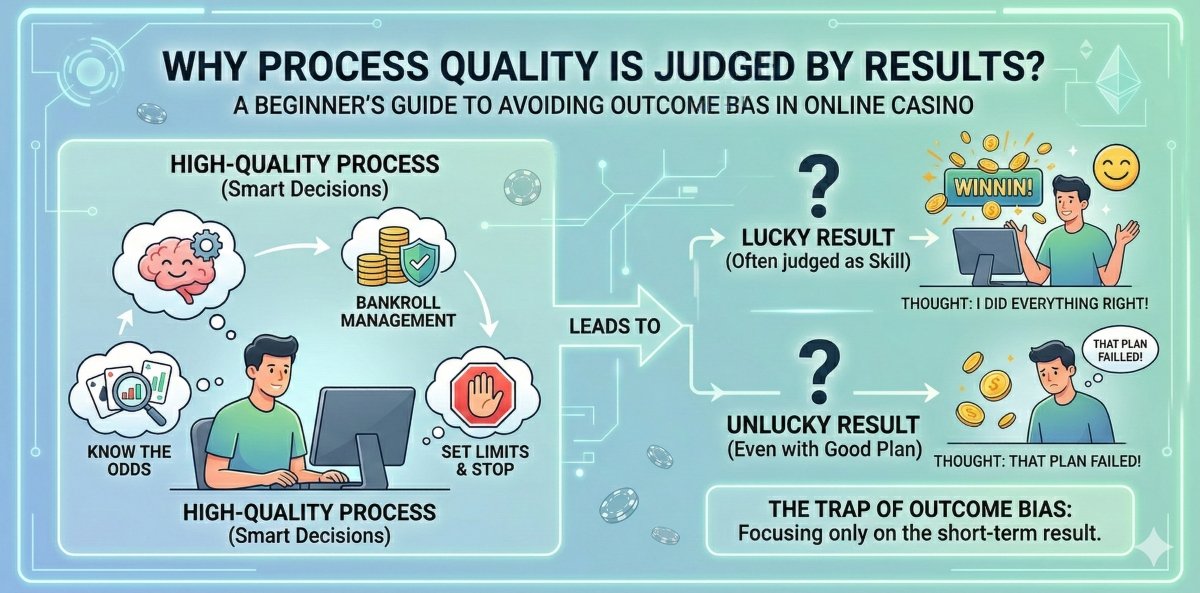
User behavior in modern gambling environments often contradicts common assumptions. It is widely believed that people gamble primarily to win money and will stop once losses outweigh enjoyment. In practice, sustained participation is rarely driven by outcomes alone. Instead, behavior is shaped by system structure, speed, and feedback loops that quietly prioritize continuity over results.
These environments do not rely on excitement or dramatic wins to keep users engaged. They rely on smoothness. The goal is not to create memorable moments, but to prevent interruptions. When examined closely, user behavior appears less like a series of decisions and more like an effort to maintain a stable state of immersion.
From Outcome Awareness to State Maintenance
Over time, many users move beyond closely tracking individual wins and losses. Financial outcomes lose emotional weight, and the experience itself becomes the primary attractor. The desired condition is one of narrowed attention, where external concerns fade and absorption takes over.
In this state, time perception weakens, and play becomes less about progress and more about maintaining participation. Users adapt their actions to preserve the state, not to optimize results. Large, reflective decisions give way to small, repeated actions that sustain flow rather than trigger evaluation. This shift is a key component of the machine zone as a behavioral state, where the objective becomes the state of play rather than profit.
The Collapse of Decision-Making Into Flow
Continuous gambling systems dissolve decision-making into ongoing interaction. Automatic repetition, rapid cycles, and minimal pause points remove the need to repeatedly choose whether to continue.
As a result, behavior shifts from reflective to procedural. Users are no longer deciding to keep playing; continuation is already in motion. Stopping, by contrast, requires intentional interruption. When continuing is easy and stopping requires effort, persistence becomes the default outcome.
Why Losses Rarely Act as Deterrents
In many contexts, loss functions as a deterrent. In continuous gambling systems, it rarely does. Losses are frequent, fragmented, and immediately followed by the next event. Sensory feedback remains consistent regardless of outcome, reducing the emotional impact of failure.
The use of credits instead of cash further abstracts loss, dulling its psychological weight. Near-miss events blur the boundary between success and failure, holding attention without delivering a clear stop signal. Together, these features prevent losses from functioning as meaningful interruption points. This is why losses do not act as behavioral warnings in high-frequency environments.
According to research from the Interaction Design Foundation, the removal of friction in digital interfaces can lead to unintended “dark patterns,” where user agency is compromised by the ease of continued interaction.
How Sessions Typically End
One of the clearest indicators of system-driven behavior is how sessions conclude. Most do not end because users feel satisfied or complete. They end when an external factor breaks the flow—such as depleted credits, physical fatigue, or outside interruption.
When environments minimize stop signals and smooth out natural friction points, voluntary disengagement becomes unlikely. Behavior continues not because users actively choose to persist, but because nothing within the system clearly signals an ending.
Shifting the Focus From Individuals to Structure
Understanding these dynamics shifts attention away from individual blame and toward environmental influence. Difficulty disengaging is not best explained as a personal failure, but as a predictable outcome of system design.
From a behavioral perspective, participation and persistence emerge from structure, not intention. When systems reduce friction, fragment decisions, and stabilize immersion, continued behavior becomes the most natural result.
Conclusion
User behavior in continuous gambling systems is shaped less by the pursuit of winning and more by the maintenance of an absorbing, low-friction state. Outcomes matter less than continuity, and decisions matter less than flow. By examining behavior through a structural lens, persistence can be understood as an environmental effect rather than a personal choice.